The Third of May 1808
At a glance
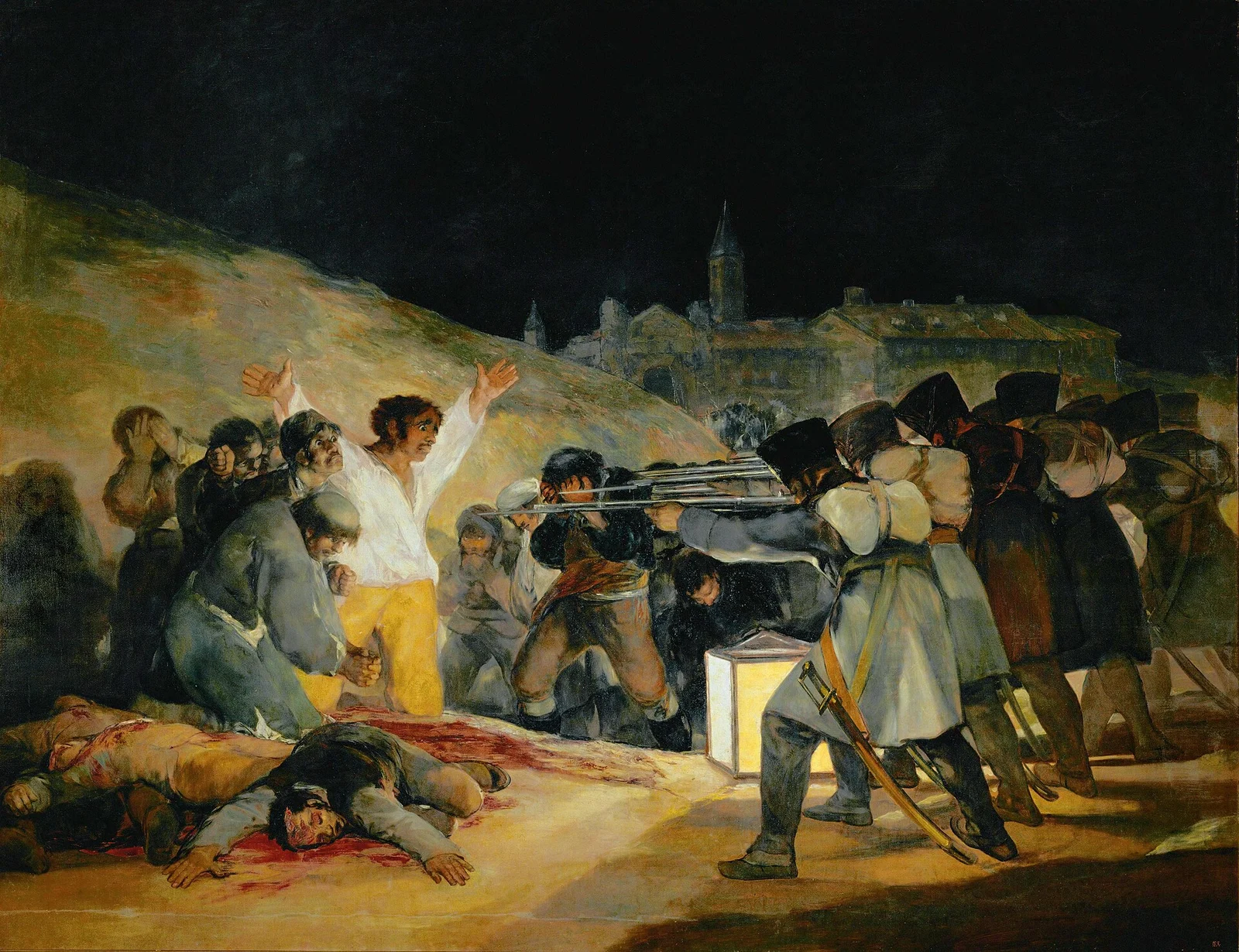
Goya stages a nighttime execution after Madrid’s uprising against Napoleon’s occupying forces, with a lantern lighting the victims and leaving the firing squad faceless.
Historical account
The Madrid uprising and the executions that followed
An occupied capital
French troops were in Madrid as Napoleon intervened in Spain’s succession. On 2 May 1808, crowds resisted the removal of members of the Spanish royal family and fighting spread through the city.
Reprisals
French forces suppressed the revolt and executed prisoners during the night and the following day. The killings became part of the memory of occupation and the Peninsular War.
Painting the event after the war
Goya returned to the uprising in 1814. His pair of canvases stages the struggle and the reprisals from different points of view.
Which moment does the artwork show?
Here the squad faces a group about to be shot. A lantern gives the victims distinct faces and gestures while the soldiers turn away from the viewer.
The story behind the artwork
After the uprising
Crowds resisted the French occupation in Madrid on 2 May 1808. French troops carried out reprisals, and Goya painted the executions in 1814 as part of a pair commemorating the events.
Two sides of a lantern
The soldiers are seen mostly from behind, bundled into repeated silhouettes. The people facing them retain distinct poses and expressions, with a white shirt drawing the strongest light.
A closer look
Outstretched arms make the figure visible beyond the lower pool of light.
The bodies and weapons form a repeated diagonal that closes off the right side.
The box lantern turns one patch of earth into the centre of the scene.
The foreground makes the next instant visible before it arrives.
Dim buildings place the violence near streets otherwise quiet and empty.
Sources
Related works
Saturn Devouring His Son
Francisco de Goya
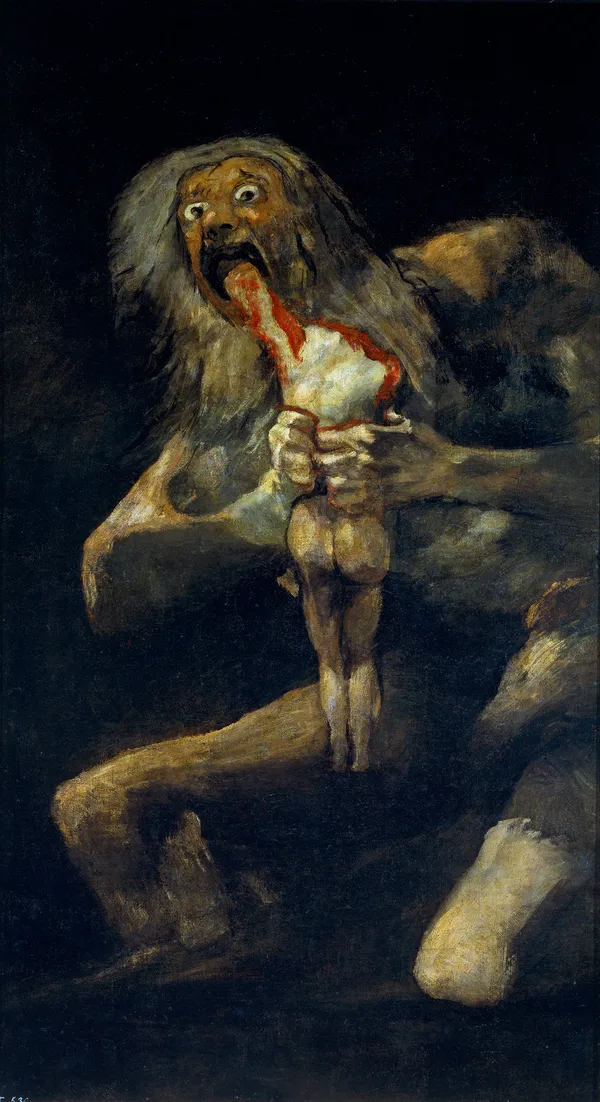
A wide-eyed figure grips a smaller body in one of the disturbing wall paintings Goya made in his home outside Madrid.
Liberty Leading the People
Eugène Delacroix
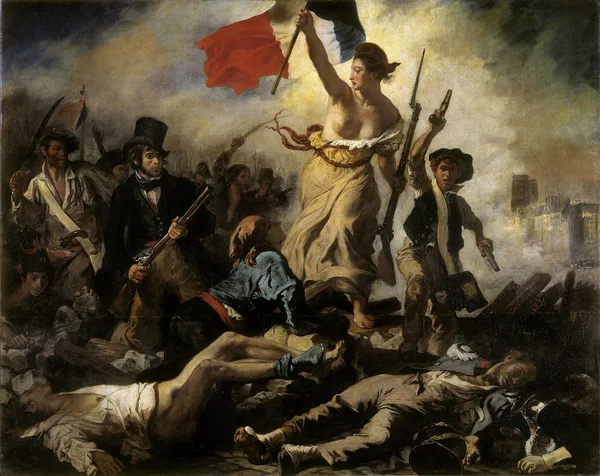
Delacroix personifies Liberty as a woman raising the tricolour over a Paris street barricade during the July Revolution of 1830.
The Raft of the Medusa
Théodore Géricault
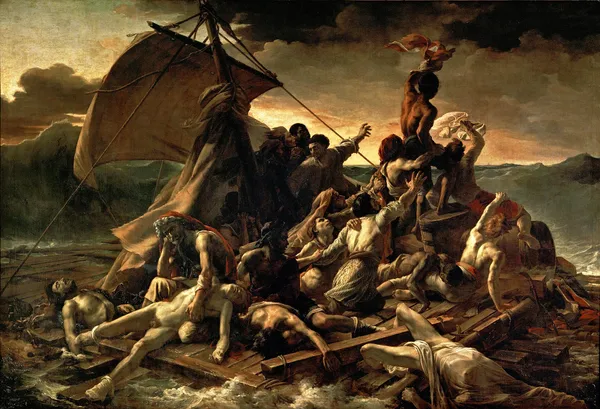
Géricault paints the survivors of the wreck of the Méduse on a makeshift raft, building the composition toward a nearly invisible chance of rescue.
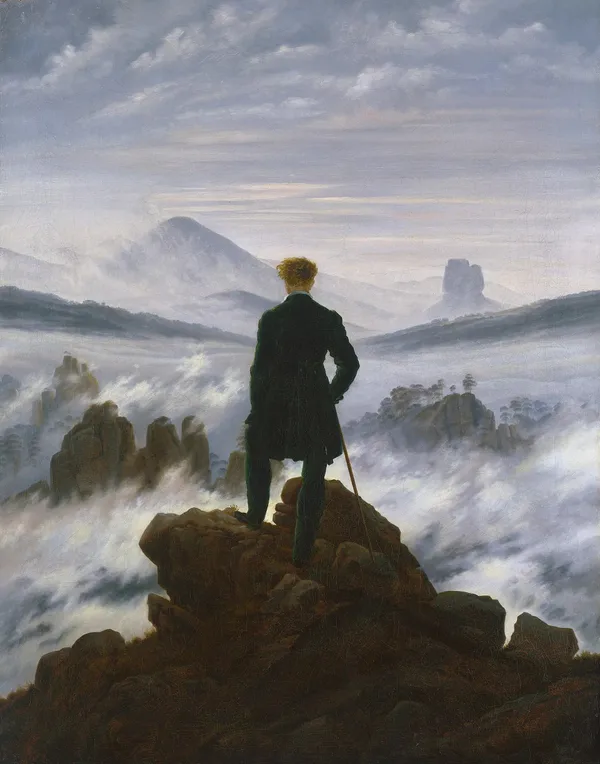
Wanderer above the Sea of Fog
Caspar David Friedrich
Friedrich places a lone figure above a fog-filled mountain landscape, inviting the viewer to share a view whose distances remain difficult to judge.