The Raft of the Medusa
At a glance
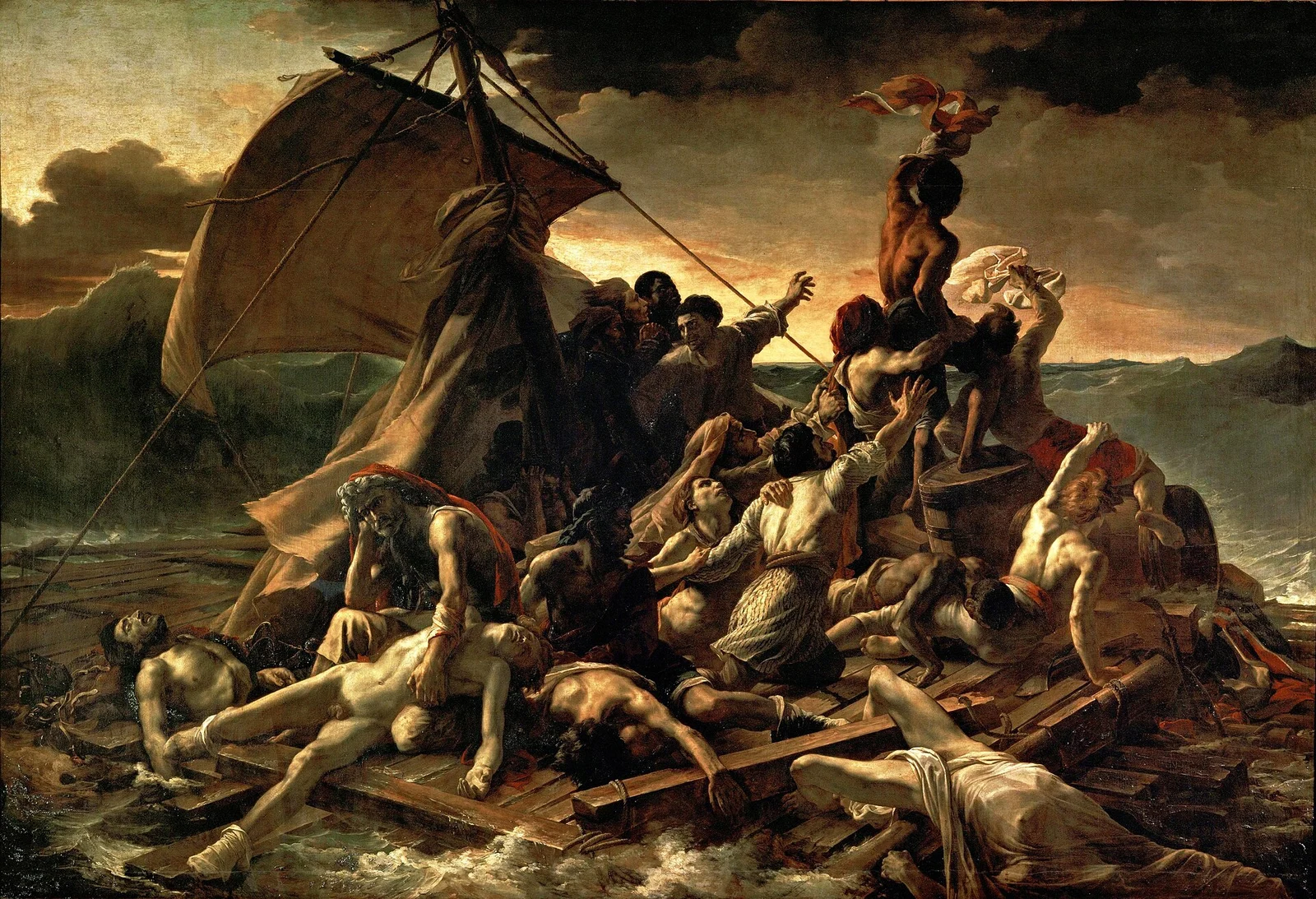
Géricault paints the survivors of the wreck of the Méduse on a makeshift raft, building the composition toward a nearly invisible chance of rescue.
Historical account
The wreck of the Méduse and thirteen days adrift
Grounded on the voyage to Senegal
In July 1816 the frigate struck the Banc d’Arguin off West Africa. With too little space in the boats, about 150 people were put onto an improvised raft.
Life on the raft
The raft became separated from the boats towing it. Exposure, hunger, violence and loss at sea reduced the group to fifteen when the Argus found it after thirteen days.
An affair made public
Survivors Alexandre Corréard and Henri Savigny helped make the disaster and the conduct of the voyage a public scandal. Géricault used their testimony to shape his enormous canvas.
Which moment does the artwork show?
The survivors appear to have glimpsed a ship. Its tiny position on the horizon makes their signal anything but a certain rescue.
The story behind the artwork
A disaster off West Africa
The French frigate Méduse ran aground in 1816. Many passengers and crew were put on a raft that was left adrift, and only a small fraction survived until the rescue ship Argus found them.
The instant of a sighting
Géricault consulted survivors and studied how people might occupy the raft. He built an ascent from collapsed bodies to the figure waving cloth at the horizon.
A closer look
The raised fabric marks the top of the group’s collective reach.
The foreground figures hang over the timbers, their limbs following the raft’s edge.
The inflated sail points away from the hopeful group gathering at the opposite side.
The tiny ship makes the distance between signal and response feel immense.
His lowered head holds a pocket of grief within the larger surge.
Sources
Related works
Liberty Leading the People
Eugène Delacroix
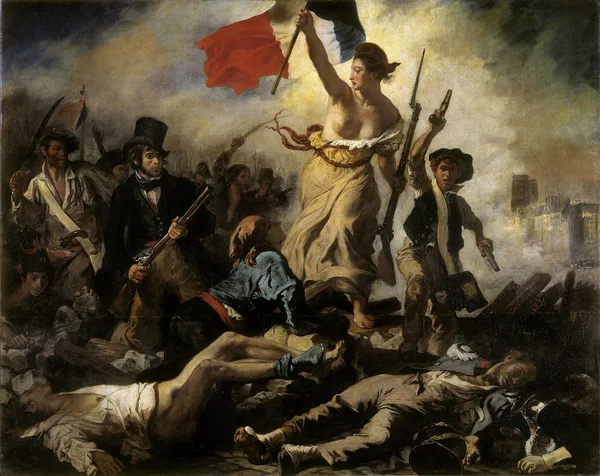
Delacroix personifies Liberty as a woman raising the tricolour over a Paris street barricade during the July Revolution of 1830.
Wanderer above the Sea of Fog
Caspar David Friedrich
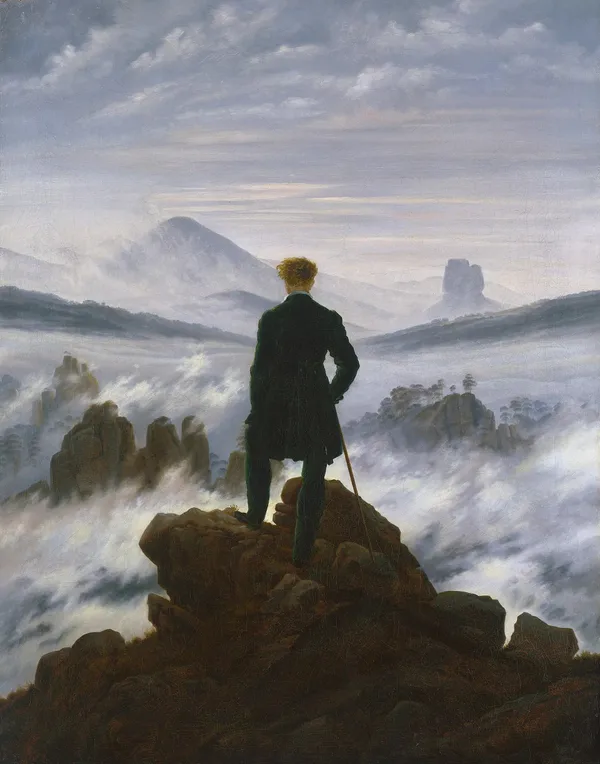
Friedrich places a lone figure above a fog-filled mountain landscape, inviting the viewer to share a view whose distances remain difficult to judge.
The Third of May 1808
Francisco de Goya
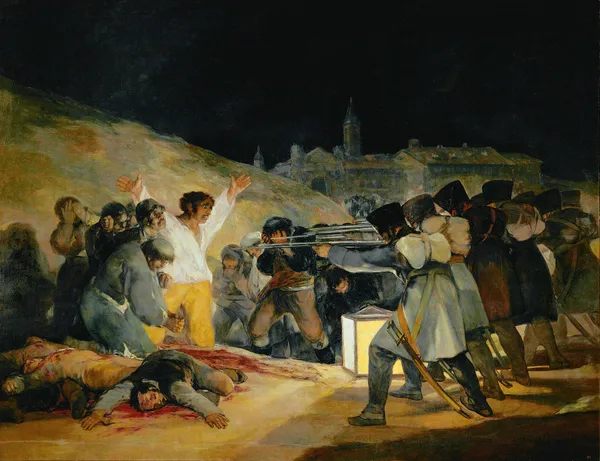
Goya stages a nighttime execution after Madrid’s uprising against Napoleon’s occupying forces, with a lantern lighting the victims and leaving the firing squad faceless.
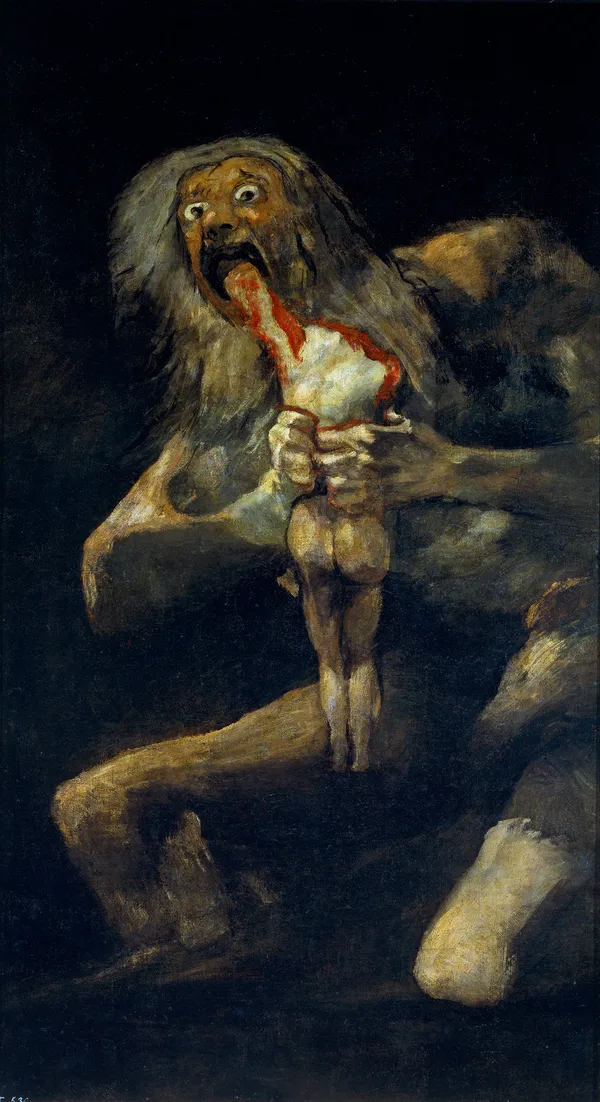
Saturn Devouring His Son
Francisco de Goya
A wide-eyed figure grips a smaller body in one of the disturbing wall paintings Goya made in his home outside Madrid.