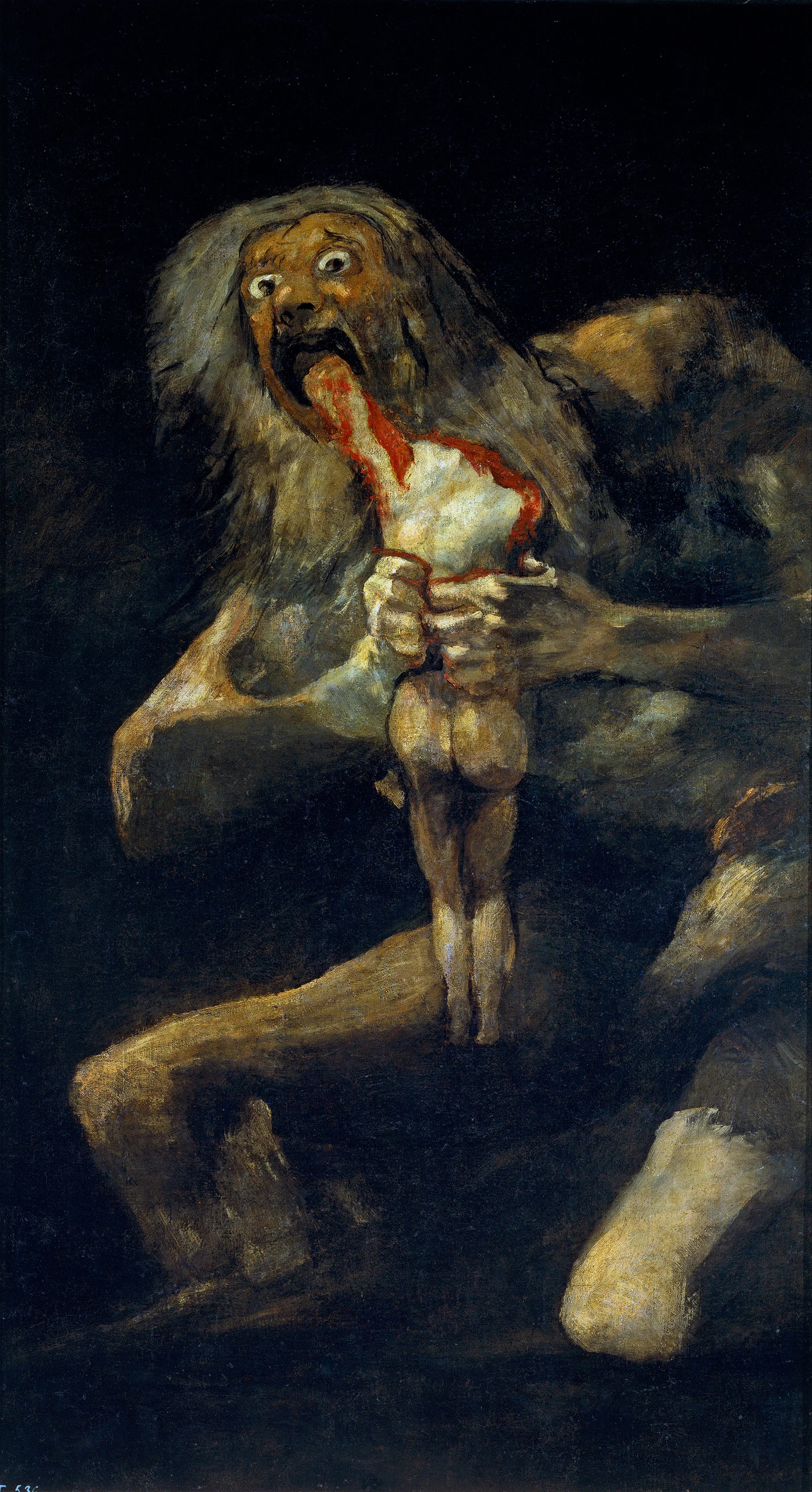
Saturn Devouring His Son
At a glance
A wide-eyed figure grips a smaller body in one of the disturbing wall paintings Goya made in his home outside Madrid.
Mythology
Cronus, the prophecy and the child who escaped
Fear of a successor
In Hesiod’s account, Cronus learns he is destined to be overthrown by one of his children. He swallows them after birth to preserve his power.
Rhea’s deception
Rhea hides Zeus and gives Cronus a stone wrapped in cloth. He swallows it in place of the child.
The next generation
Zeus survives, frees his siblings and eventually displaces Cronus. The Roman name Saturn became attached to Cronus in later reception.
Which moment does the artwork show?
Goya concentrates on the swallowing or devouring itself. The painting has no surviving title from the artist, so its identification with Saturn remains a reading.
The story behind the artwork
A painted interior
The work belonged to the Black Paintings in the Quinta del Sordo. The series was later transferred from the house walls to canvas, and the titles now used are conventional.
The myth attached to the image
Cronus, identified with the Roman Saturn, swallowed his children to prevent a prophecy that one would overthrow him. Goya’s depiction is read in that tradition, though the original wall painting bore no known title by Goya.
A closer look
The eye whites cut through the dark face and make the stare immediate.
The knuckles and fingers are picked out as they press into the body.
The lighter flesh produces a sharp vertical break against the darkness.
A compact angle at the bottom makes the large figure appear crouched.
The shoulder merges into the wall of dark paint around the figure.
Sources
Related works
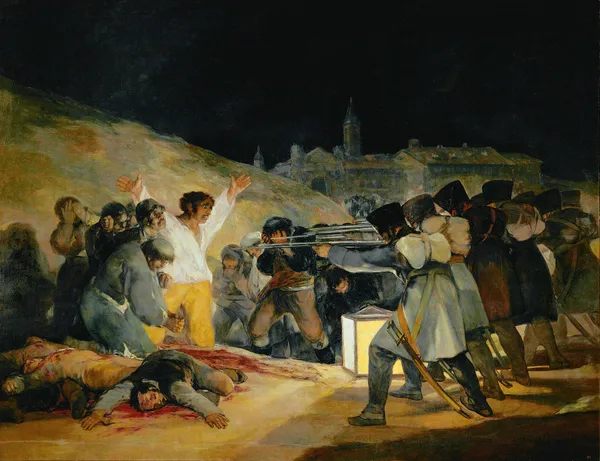
The Third of May 1808
Francisco de Goya
Goya stages a nighttime execution after Madrid’s uprising against Napoleon’s occupying forces, with a lantern lighting the victims and leaving the firing squad faceless.
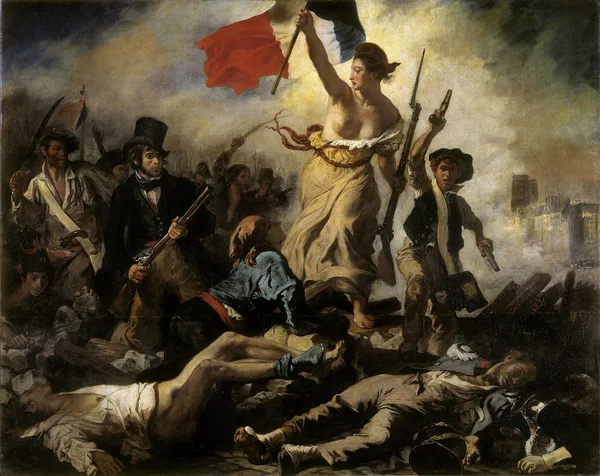
Liberty Leading the People
Eugène Delacroix
Delacroix personifies Liberty as a woman raising the tricolour over a Paris street barricade during the July Revolution of 1830.
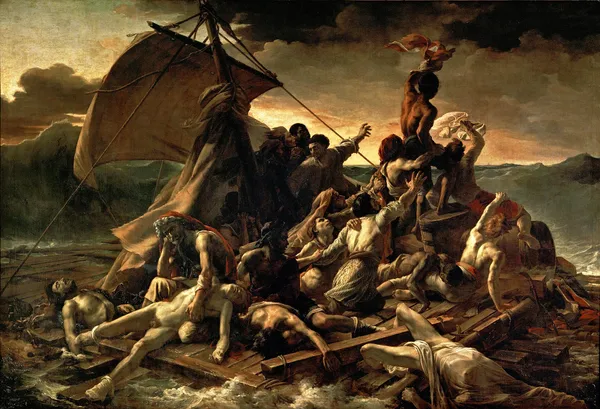
The Raft of the Medusa
Théodore Géricault
Géricault paints the survivors of the wreck of the Méduse on a makeshift raft, building the composition toward a nearly invisible chance of rescue.
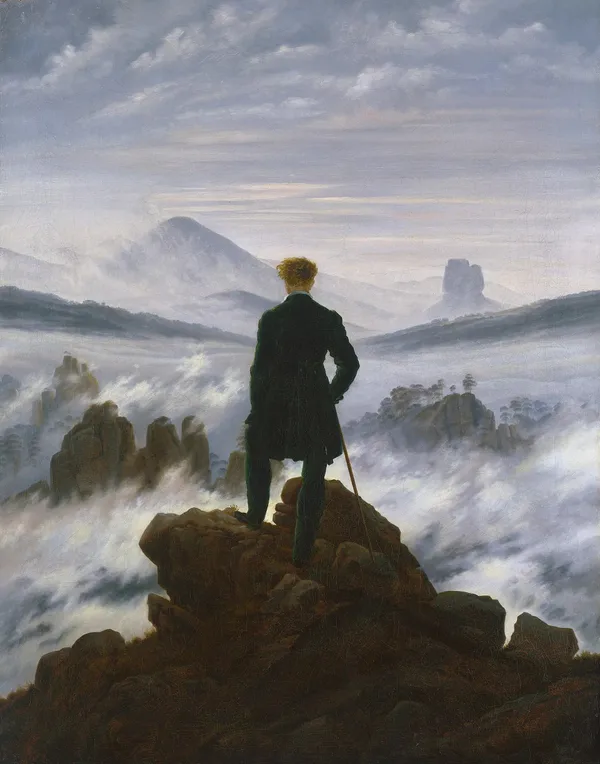
Wanderer above the Sea of Fog
Caspar David Friedrich
Friedrich places a lone figure above a fog-filled mountain landscape, inviting the viewer to share a view whose distances remain difficult to judge.