Liberty Leading the People
At a glance
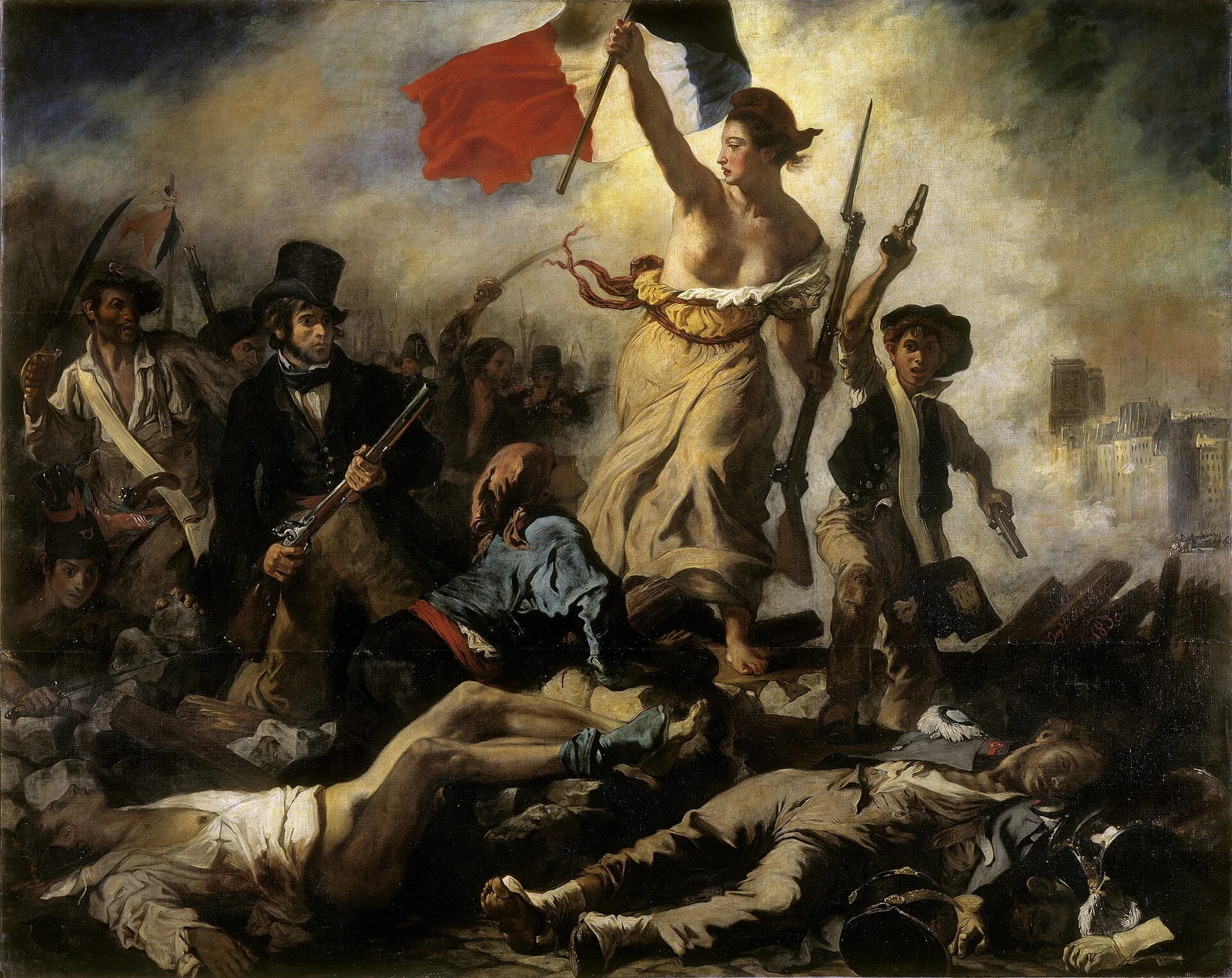
Delacroix personifies Liberty as a woman raising the tricolour over a Paris street barricade during the July Revolution of 1830.
Historical account
The three days of the July Revolution
The July Ordinances
Charles X’s government published measures restricting the press and revising the rules for elections. Journalists protested, and opposition spread through Paris.
The barricades
Between 27 and 29 July 1830, insurrectionists built barricades and fought government troops. As the balance shifted, the king lost control of the capital.
A change of monarchy
Charles abdicated, and Louis-Philippe took the throne under a revised constitutional settlement. The uprising changed the ruler and political order without immediately ending monarchy.
Which moment does the artwork show?
Delacroix builds a composite advance over a barricade. Liberty is a personification, standing amid participants who evoke the social range of the uprising.
The story behind the artwork
Three days in July
After Charles X attempted to restrict political rights and the press, fighting broke out in Paris. The July Revolution ended the senior Bourbon line’s rule and brought Louis-Philippe to the throne.
A symbol among participants
Liberty’s profile and raised flag place her above the smoky crowd. Her bare feet belong on the barricade alongside armed figures in contemporary clothing.
A closer look
The raised flag concentrates blue, white and red at the top of the composition.
Fallen bodies and debris turn the surge forward into a costly advance.
The man’s hat identifies a different kind of participant from those in work clothes.
The boy’s raised arms extend the group’s movement to the right.
The distant towers anchor a partly allegorical scene in an identifiable city.
Sources
Related works
The Raft of the Medusa
Théodore Géricault
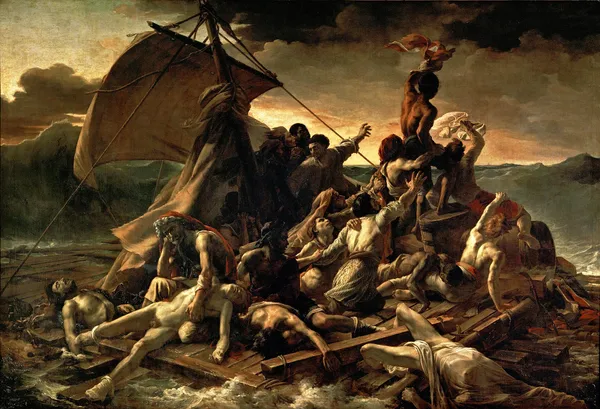
Géricault paints the survivors of the wreck of the Méduse on a makeshift raft, building the composition toward a nearly invisible chance of rescue.
Wanderer above the Sea of Fog
Caspar David Friedrich
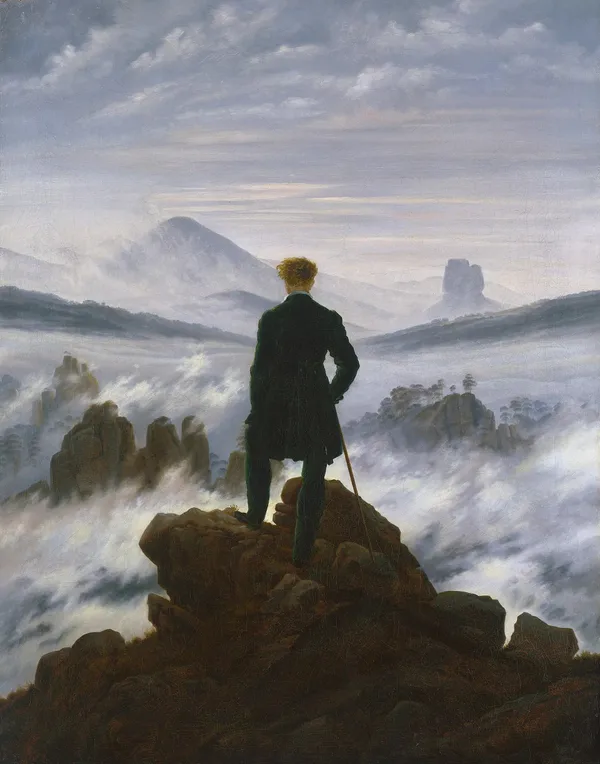
Friedrich places a lone figure above a fog-filled mountain landscape, inviting the viewer to share a view whose distances remain difficult to judge.
The Third of May 1808
Francisco de Goya
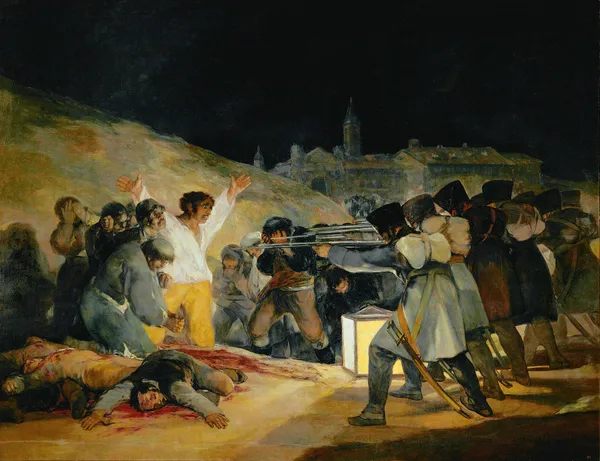
Goya stages a nighttime execution after Madrid’s uprising against Napoleon’s occupying forces, with a lantern lighting the victims and leaving the firing squad faceless.
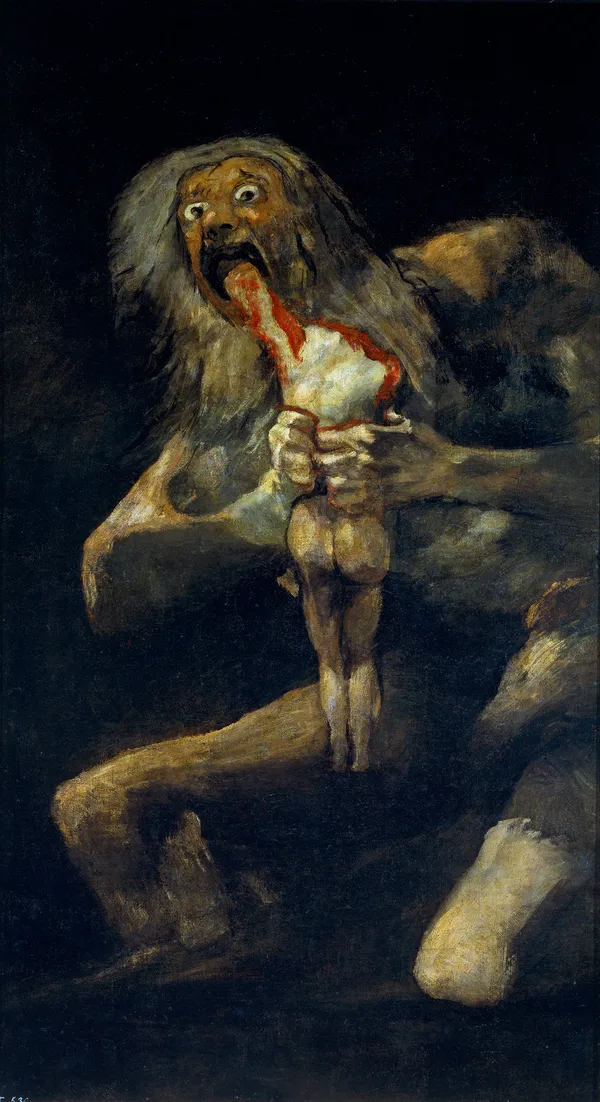
Saturn Devouring His Son
Francisco de Goya
A wide-eyed figure grips a smaller body in one of the disturbing wall paintings Goya made in his home outside Madrid.