The Yellow Christ
At a glance
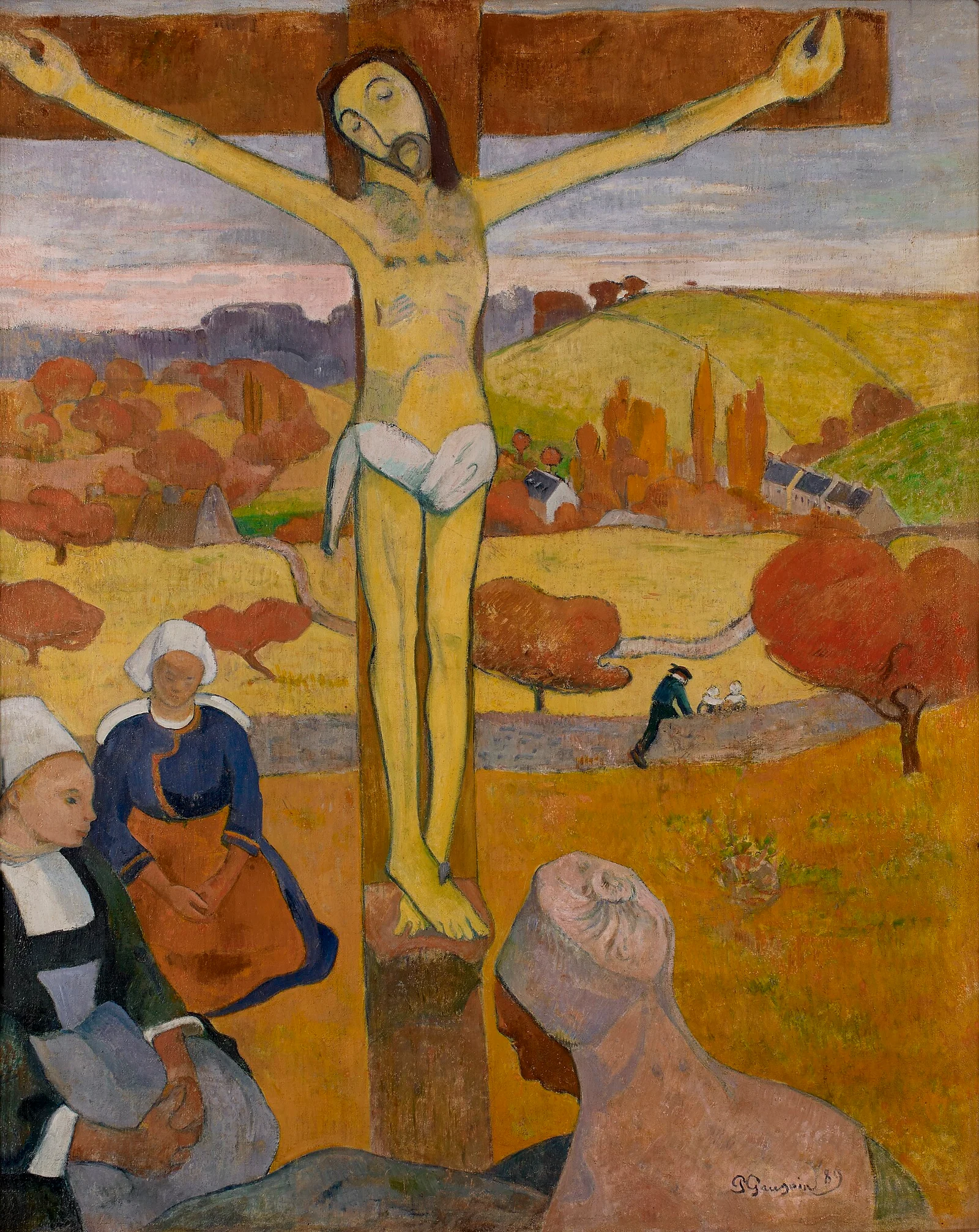
Gauguin places a yellow crucified Christ above women in Breton dress, joining a local devotional image to an autumn landscape.
Religious narrative
The Crucifixion and the empty tomb
Trial and sentence
The Gospel sequence moves from Jesus’s arrest to questioning and trial. Roman authority carries out the sentence of crucifixion.
People at the cross
The accounts describe witnesses and followers at or near the place of execution. The Crucifixion becomes central to Christian images of sacrifice and devotion.
The visit to the tomb
Women who return after the burial encounter an empty tomb. The later accounts of the Resurrection follow.
Which moment does the artwork show?
Gauguin reimagines the Crucifixion in Brittany, where local garments and scenery bring the devotional scene into the world he knew.
The story behind the artwork
A local starting point
Gauguin worked in Brittany and drew on a painted wooden crucifix at the chapel of Trémalo near Pont-Aven. He moved the scene into a painted landscape where the women gather below.
Colour across sacred and ordinary space
The yellow of the body recurs in the hills and fields. Strong outlines establish the crucifix and figures, allowing larger areas of colour to carry the mood.
A closer look
The flat colour makes the body stand out even against a closely related landscape.
Their lowered heads and local dress make the gathering recognisably Breton.
The small track carries ordinary movement past the devotional grouping.
The hills pick up the colour of the body and extend it into the distance.
The marked edge keeps the crucified shape legible against the fields.
Sources
Related works
The Starry Night
Vincent van Gogh
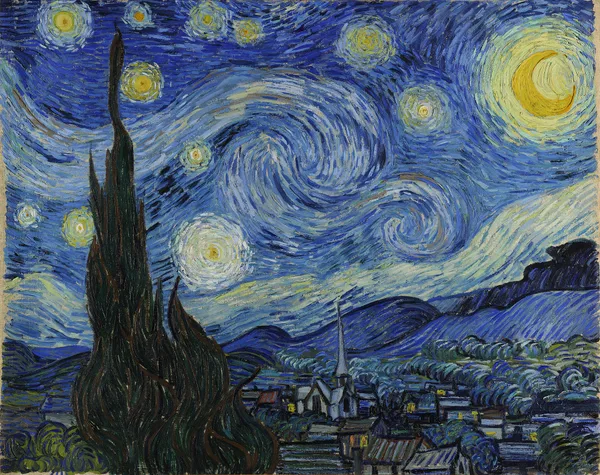
Van Gogh’s The Starry Night turns the night sky above Saint-Rémy into a field of sweeping blue strokes, with a dark cypress rising above an imagined village.
Impression, Sunrise
Claude Monet
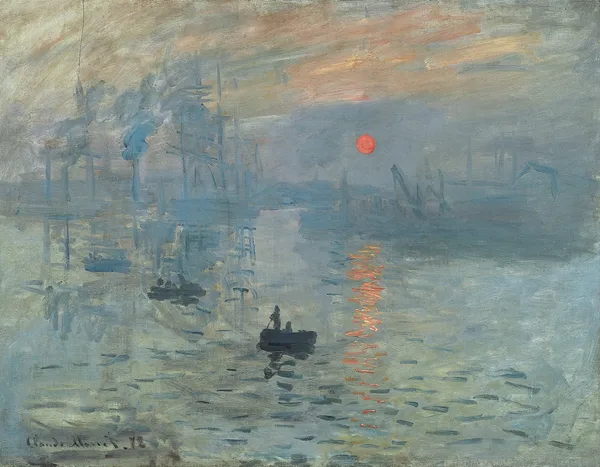
Monet sets a hot orange sun against the grey-blue haze of Le Havre, reducing a busy port to silhouettes, reflections and a few strokes of colour.
Water Lilies and Japanese Bridge
Claude Monet
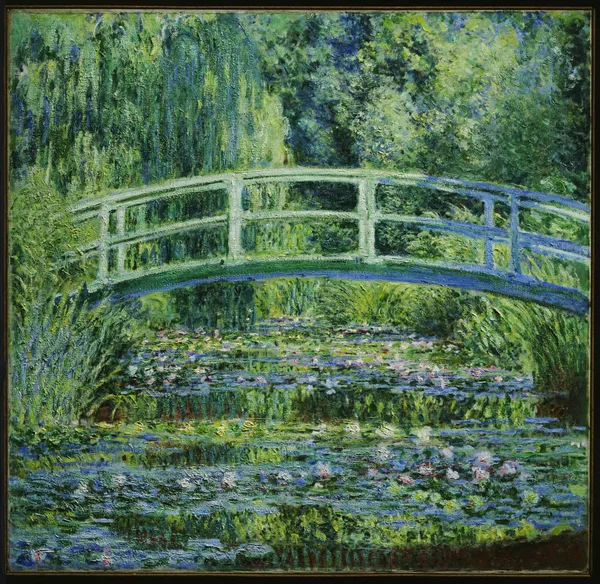
A green footbridge arches above a pond of water lilies in one of Monet’s first series from the water garden he developed at Giverny.
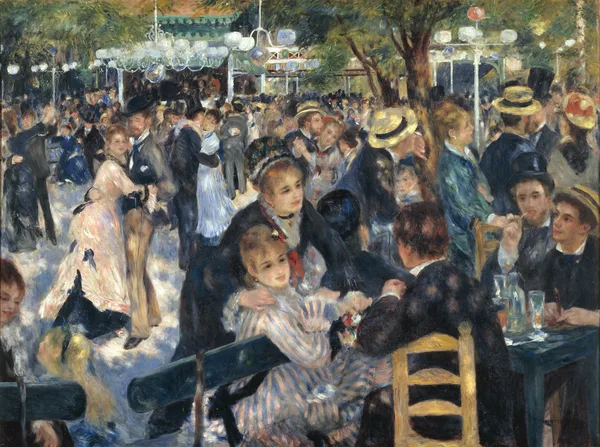
Dance at Le Moulin de la Galette
Pierre-Auguste Renoir
Renoir catches dancers and seated friends at a Montmartre open-air dance hall, with patches of sunlight crossing clothes, furniture and faces.