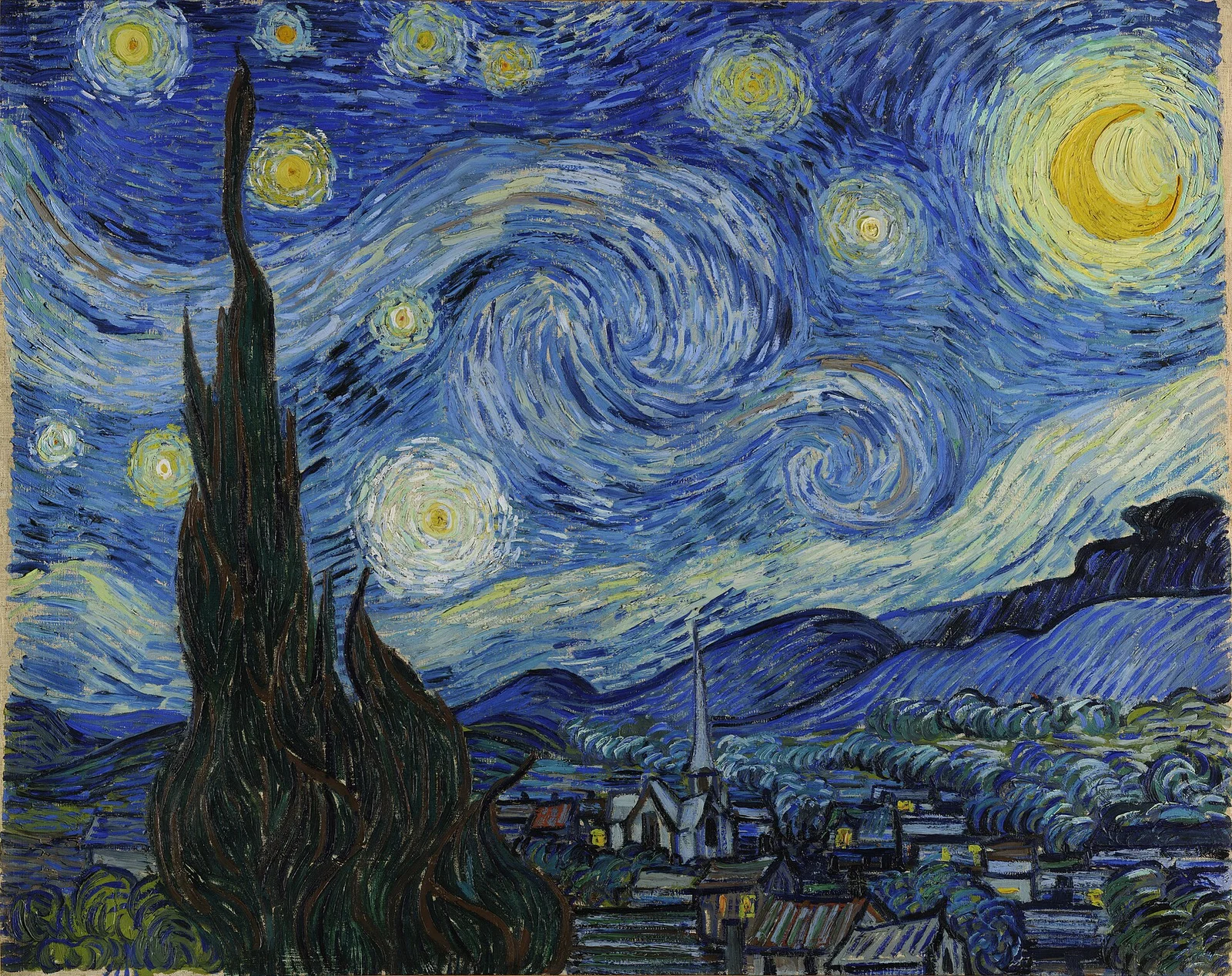
The Starry Night
At a glance
Van Gogh’s The Starry Night turns the night sky above Saint-Rémy into a field of sweeping blue strokes, with a dark cypress rising above an imagined village.
The story behind the artwork
A window on Provence
Van Gogh painted the canvas at Saint-Paul-de-Mausole in June 1889. The view from the institution inspired the hills and sky, while the village and arrangement of the foreground reflect decisions made in the studio.
How the sky moves
Loops of blue and white run across the middle of the sky, carrying the eye between the moon and stars. Below them, houses and a thin church spire are built from noticeably more angular marks.
A closer look
The dark tree crosses the horizon and makes the sky feel close to the foreground.
Bands of short brushstrokes make the clouds seem to move in more than one direction.
A fine upright rises from the angular village and echoes the larger tree.
Yellow and orange circles carry the moon’s brightness into the surrounding blue.
Layered hills give the lower landscape a slow rhythm beneath the moving sky.
Sources
Related works
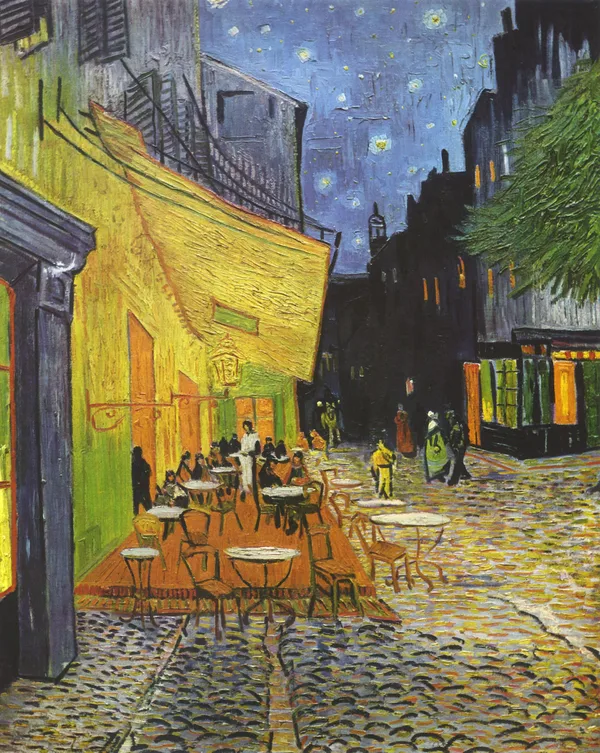
Café Terrace at Night
Vincent van Gogh
Van Gogh sets the gold awning of an Arles café against a blue night sky, using the cobbled street to lead past seated customers and into darkness.
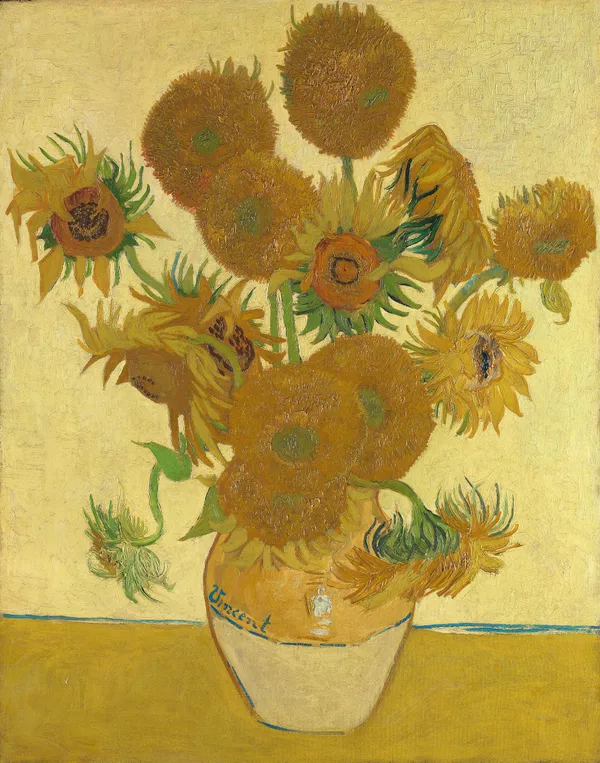
Sunflowers
Vincent van Gogh
The National Gallery’s Sunflowers presents blooms at different stages of life, with textured yellows and ochres spread from the vase to the wall.
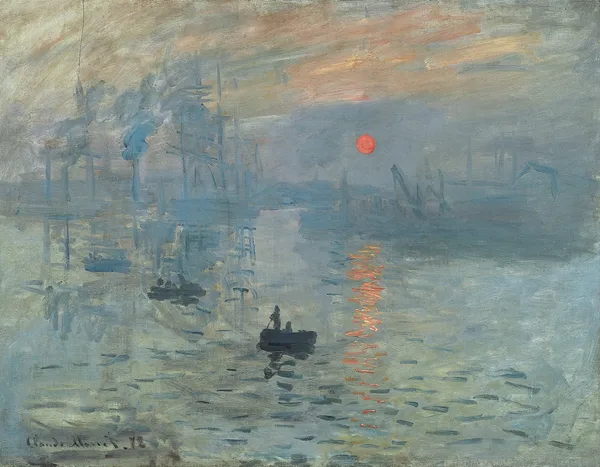
Impression, Sunrise
Claude Monet
Monet sets a hot orange sun against the grey-blue haze of Le Havre, reducing a busy port to silhouettes, reflections and a few strokes of colour.
Water Lilies and Japanese Bridge
Claude Monet
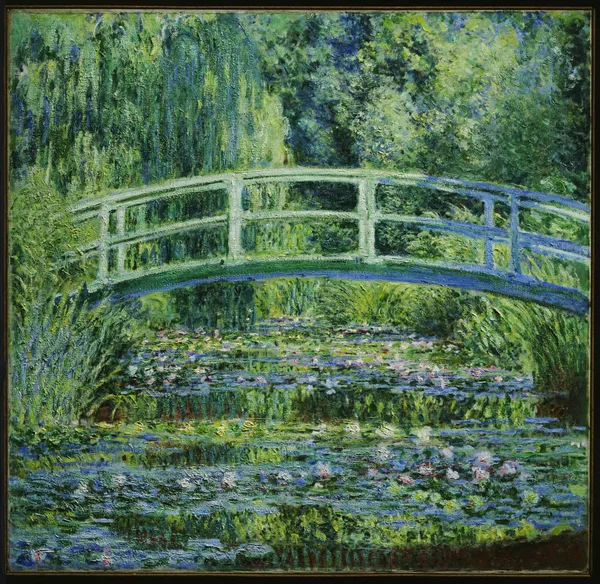
A green footbridge arches above a pond of water lilies in one of Monet’s first series from the water garden he developed at Giverny.