Water Lilies and Japanese Bridge
At a glance
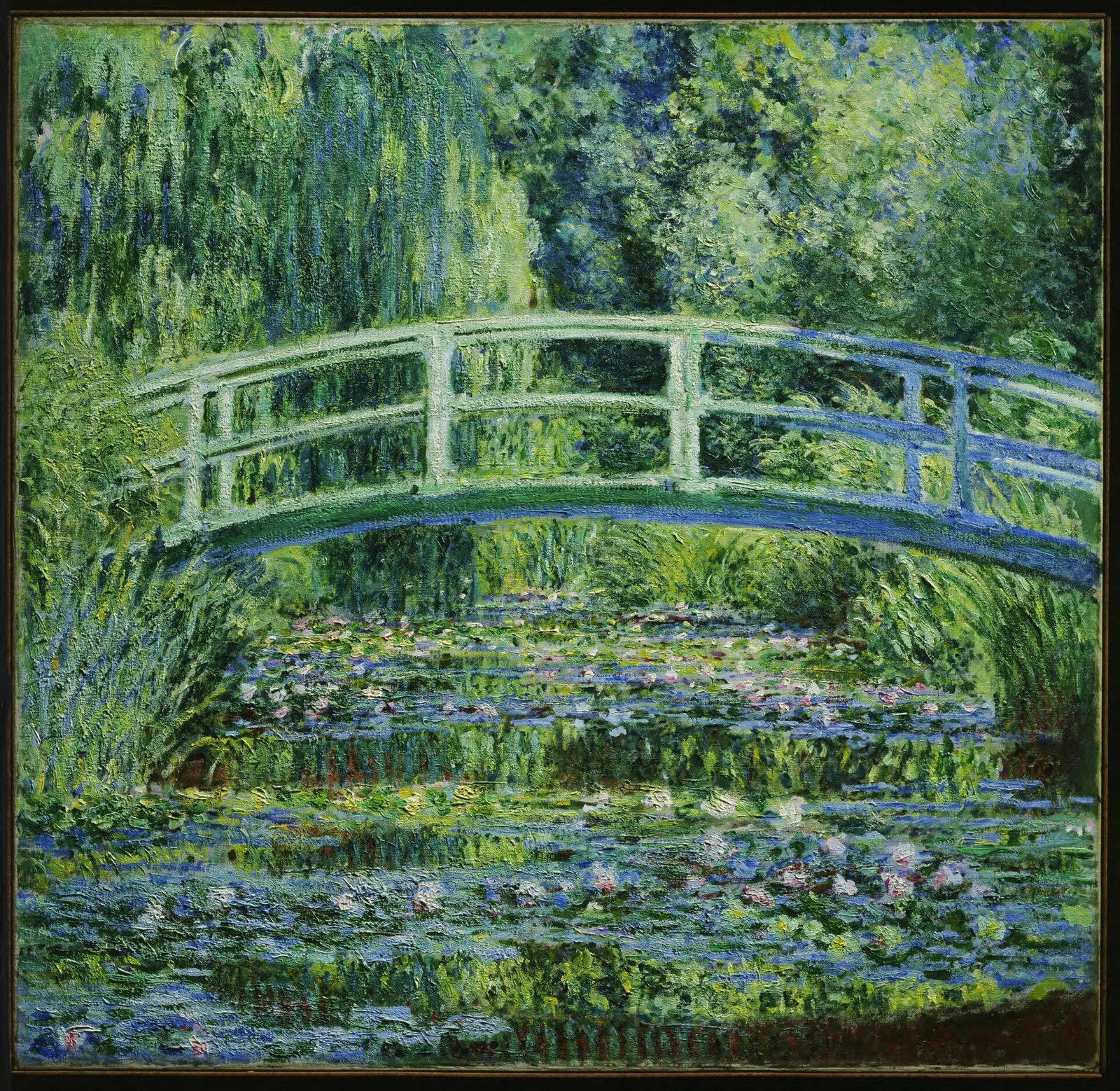
A green footbridge arches above a pond of water lilies in one of Monet’s first series from the water garden he developed at Giverny.
The story behind the artwork
Making a subject to paint
Monet cultivated the garden at his home and returned to it repeatedly. The Japanese-style bridge let him place a persistent architectural shape over surfaces that changed with the water and light.
Above and below the bridge
The leaves and railing occupy real space, while reflections turn what is above the pond into colour below. The few gaps between floating plants are enough to sustain both readings.
A closer look
The bridge gives the dense vegetation a single readable curve.
Flat patches occupy the surface even where reflections suggest depth.
The downward strokes create a living screen behind the bridge.
Small clearings between supports help distinguish the bridge from the branches.
A darker reflected passage shows through the pink and green.
Sources
Image credit
The Princeton version dates to 1899 and is catalogued as y1972-15.
Wikimedia Commons Original file (1.9 MB) Claude MonetPublic domainRelated works
Impression, Sunrise
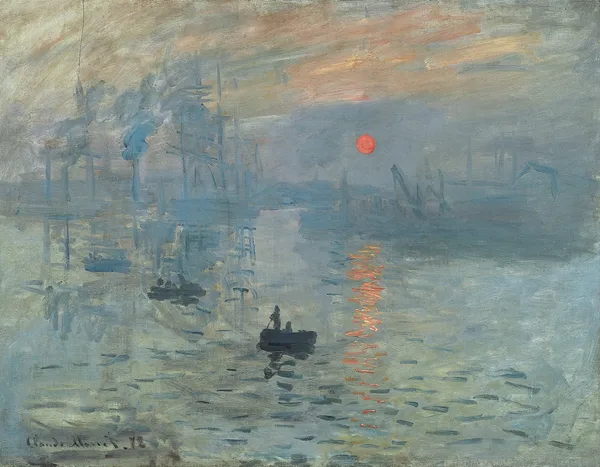
Claude Monet
Monet sets a hot orange sun against the grey-blue haze of Le Havre, reducing a busy port to silhouettes, reflections and a few strokes of colour.
The Starry Night
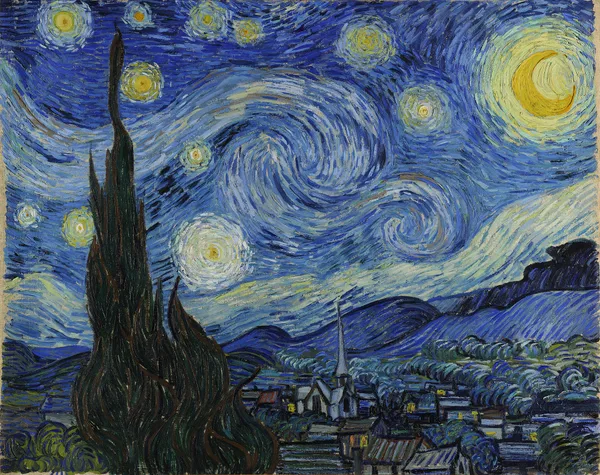
Vincent van Gogh
Van Gogh’s The Starry Night turns the night sky above Saint-Rémy into a field of sweeping blue strokes, with a dark cypress rising above an imagined village.
Dance at Le Moulin de la Galette
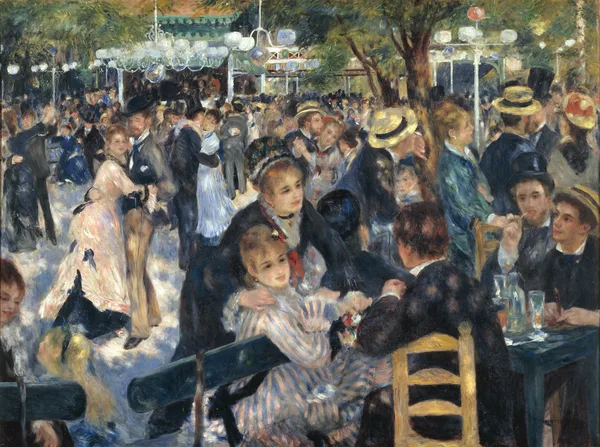
Pierre-Auguste Renoir
Renoir catches dancers and seated friends at a Montmartre open-air dance hall, with patches of sunlight crossing clothes, furniture and faces.
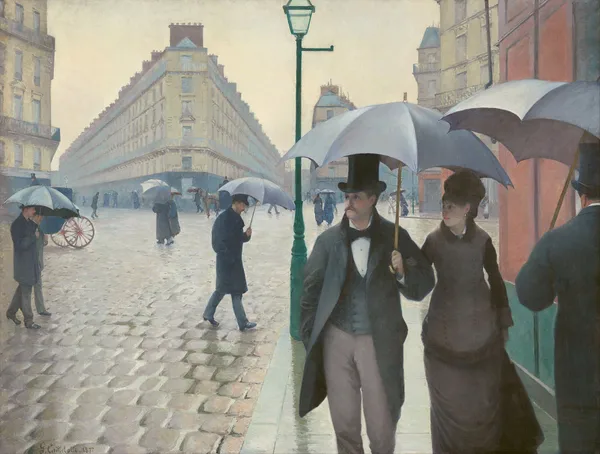
Paris Street; Rainy Day
Gustave Caillebotte
Caillebotte arranges umbrellas and cropped figures across a broad Paris intersection, where wet paving and a central lamppost make the new streets feel unusually spacious.