The Slave Ship
At a glance
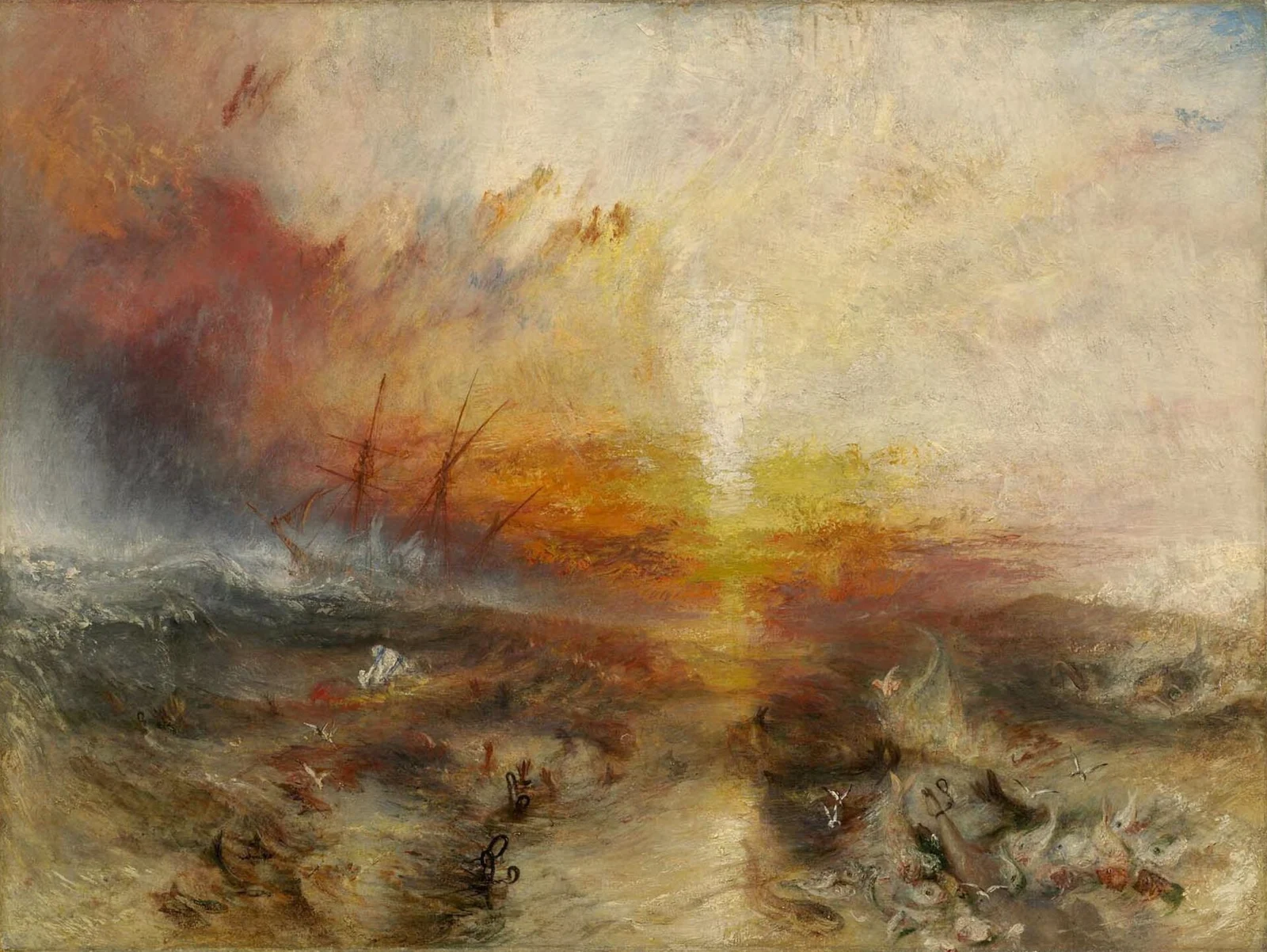
Turner places the evidence of human suffering in the foreground of a turbulent seascape, drawing on the history of people thrown overboard from the slave ship Zong.
Historical account
The Zong killings and the insurance case
A voyage built on captivity
In 1781 the Zong was carrying enslaved Africans across the Atlantic. Poor navigation, disease and conditions aboard increased the danger to everyone being held on the ship.
Killings treated as loss of cargo
Members of the crew threw more than 130 people overboard. The ship’s owners then sought insurance payment for people whom the trade treated legally as property.
What the case exposed
Proceedings concerned insurance liability. Abolitionists helped bring attention to the killings, but the litigation produced no murder convictions.
Which moment does the artwork show?
Turner condenses the history into a violent sea, with signs of the victims surfacing near the viewer as the ship recedes.
The story behind the artwork
The historical reference
In 1781, the crew of the Zong threw enslaved people into the sea. The ensuing insurance dispute made the killings known publicly. Turner painted his picture decades later as the campaign against slavery continued.
Looking past the sunset
A distant ship is caught in a field of red atmosphere and rising sea. Limbs and shackles appear close to the viewer, so attention moves from the force of the weather to evidence of a human crime.
A closer look
The ship’s tall rigging is almost swallowed by colour and spray.
The surface contains fragments that are easier to recognise after sustained looking.
The central brightness opens into the turbulence across the canvas.
A broad shadow closes the space above the ship and signals the approaching storm.
The water alternately reveals and conceals figures at the front.
Sources
Related works
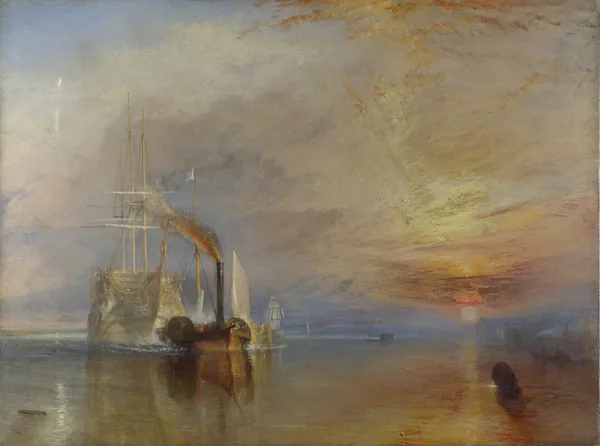
The Fighting Temeraire
Joseph Mallord William Turner
Turner contrasts a pale sailing warship with a dark steam tug on the Thames, framing the old Temeraire’s final journey against a setting sun.
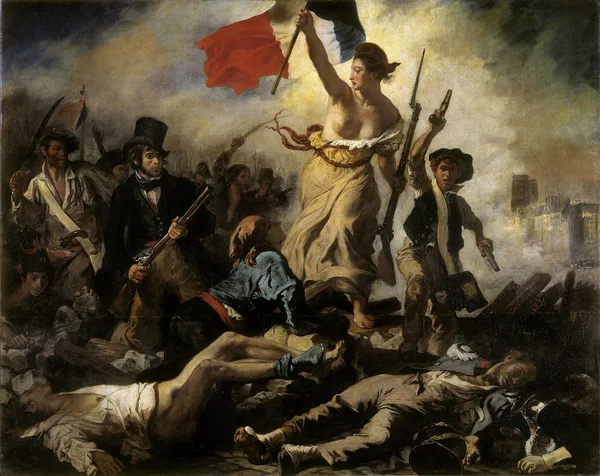
Liberty Leading the People
Eugène Delacroix
Delacroix personifies Liberty as a woman raising the tricolour over a Paris street barricade during the July Revolution of 1830.
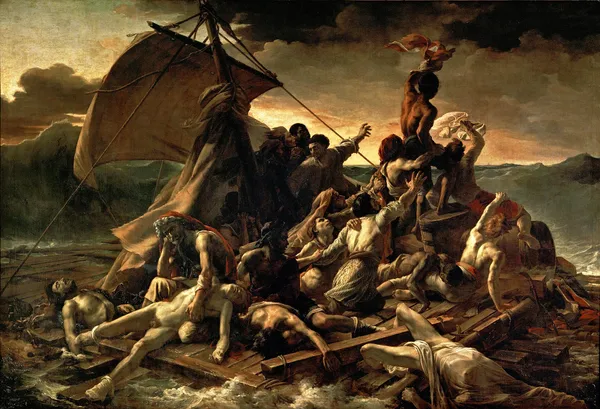
The Raft of the Medusa
Théodore Géricault
Géricault paints the survivors of the wreck of the Méduse on a makeshift raft, building the composition toward a nearly invisible chance of rescue.
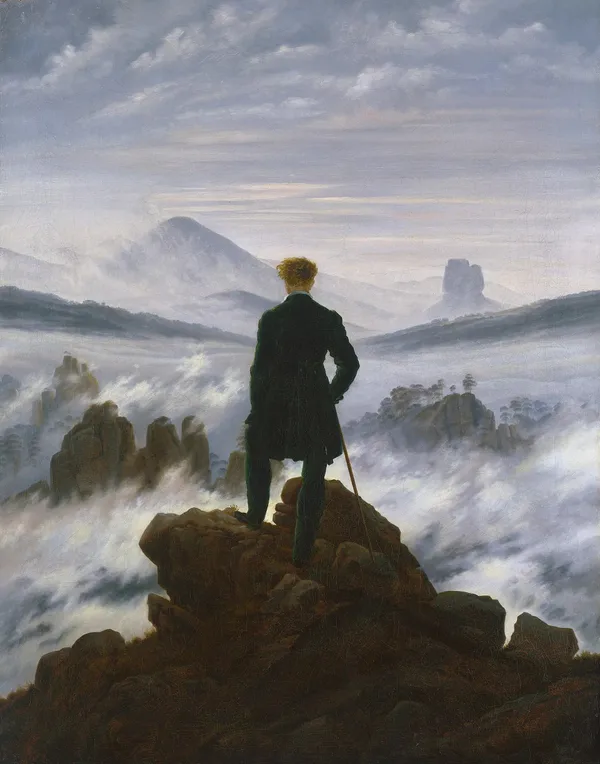
Wanderer above the Sea of Fog
Caspar David Friedrich
Friedrich places a lone figure above a fog-filled mountain landscape, inviting the viewer to share a view whose distances remain difficult to judge.