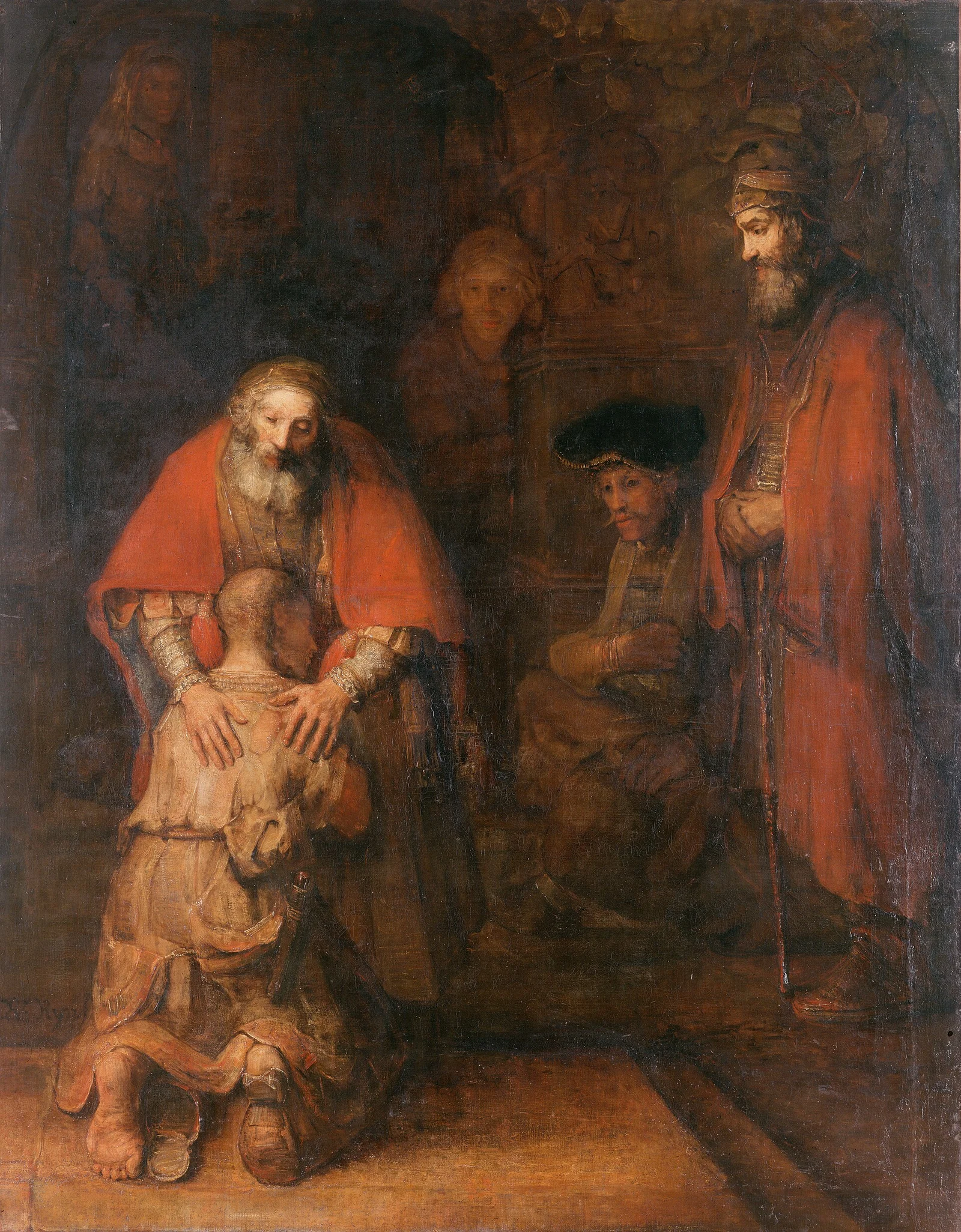
The Return of the Prodigal Son
At a glance
Rembrandt builds the reunion of father and son around a low, quiet embrace, leaving much of the scene in warm shadow.
Religious narrative
The younger son comes home
An early inheritance
In Luke’s parable, the younger son takes his share of the inheritance and spends it far away. Famine eventually leaves him desperate.
A father runs to meet him
The son returns expecting to ask for work. His father instead embraces him and calls for a celebration.
The elder brother’s objection
The elder brother protests the welcome. The father answers that the lost son’s return is reason to rejoice.
Which moment does the artwork show?
Rembrandt fixes the reunion on the grave action of the father’s hands. The feast itself stays outside the frame.
The story behind the artwork
The parable’s ending
In Luke’s Gospel, the younger son leaves home, loses his inheritance and returns. His father welcomes him before he can ask to be taken on as a servant.
Silence around the embrace
Rembrandt places the kneeling son with his back partly to us and makes the father’s hands easy to see. The surrounding onlookers create distance around a deeply private exchange.
A closer look
The hands rest on the son’s shoulders and back, answering the kneeling posture.
Worn footwear and exposed skin suggest the hardship of the journey home.
The father’s face leans into the bright field around the embrace.
The long vertical figure at the right seems to pause before approaching.
A face emerges from the darkness, extending the circle of witnesses.
Sources
Related works
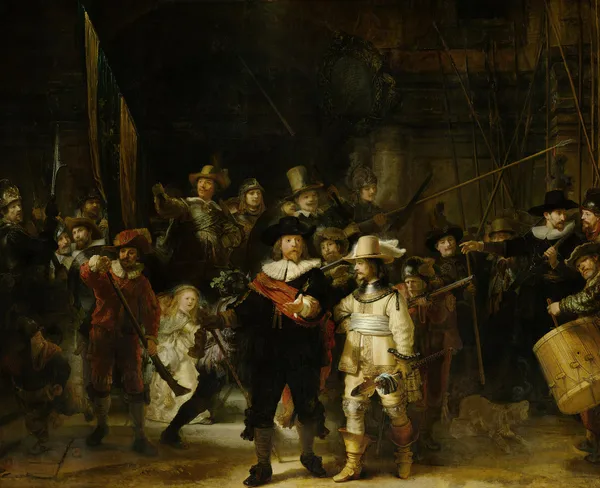
The Night Watch
Rembrandt van Rijn
Rembrandt catches an Amsterdam civic guard company in motion, with its captain and lieutenant stepping forward from a crowded interior.
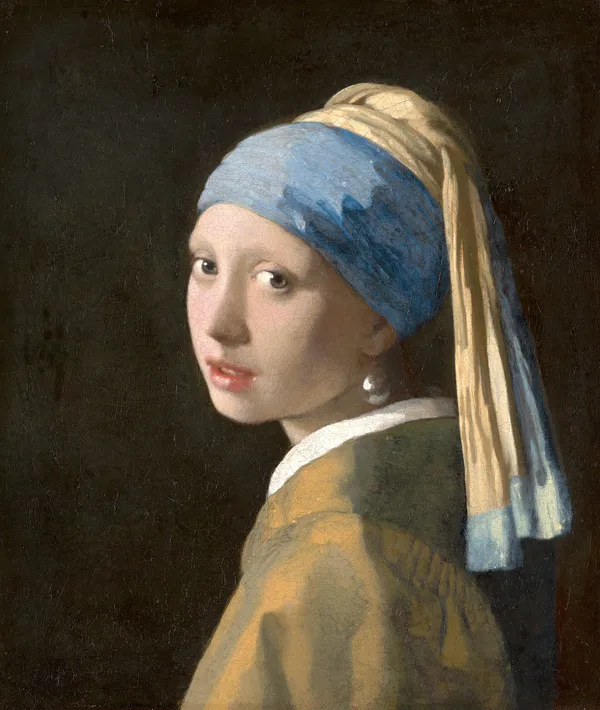
Girl with a Pearl Earring
Johannes Vermeer
Vermeer’s young figure looks back over her shoulder, picked out against a dark ground by blue cloth, a white collar and a gleaming earring.
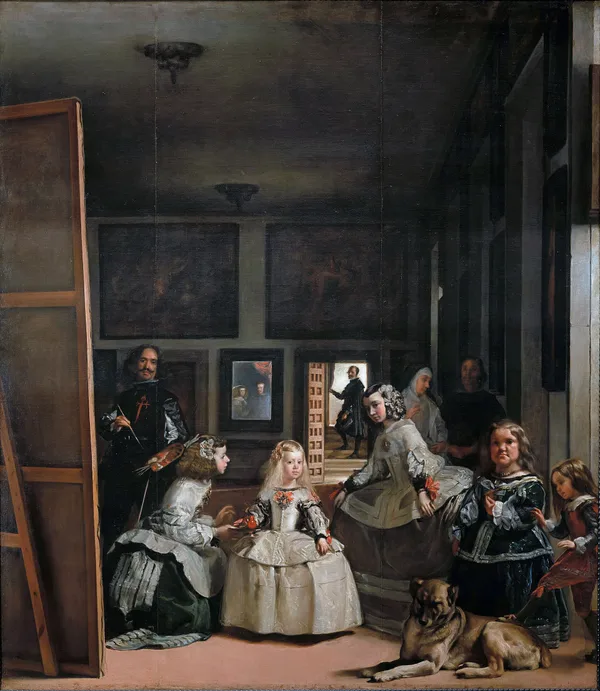
Las Meninas
Diego Velázquez
Velázquez places Infanta Margarita at the heart of a court scene that makes the viewer wonder who is being painted and who is looking.
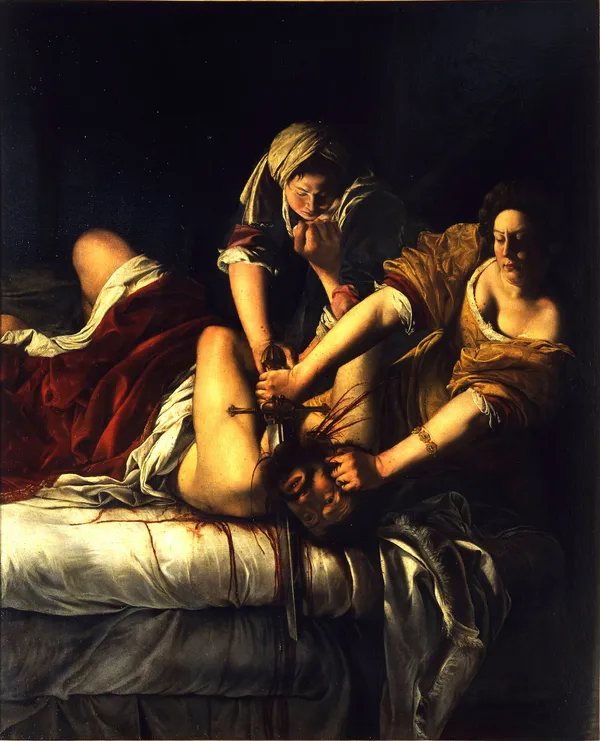
Judith Slaying Holofernes
Artemisia Gentileschi
In the Uffizi version, Artemisia Gentileschi makes the effort of Judith and her maidservant central to the story of Holofernes.