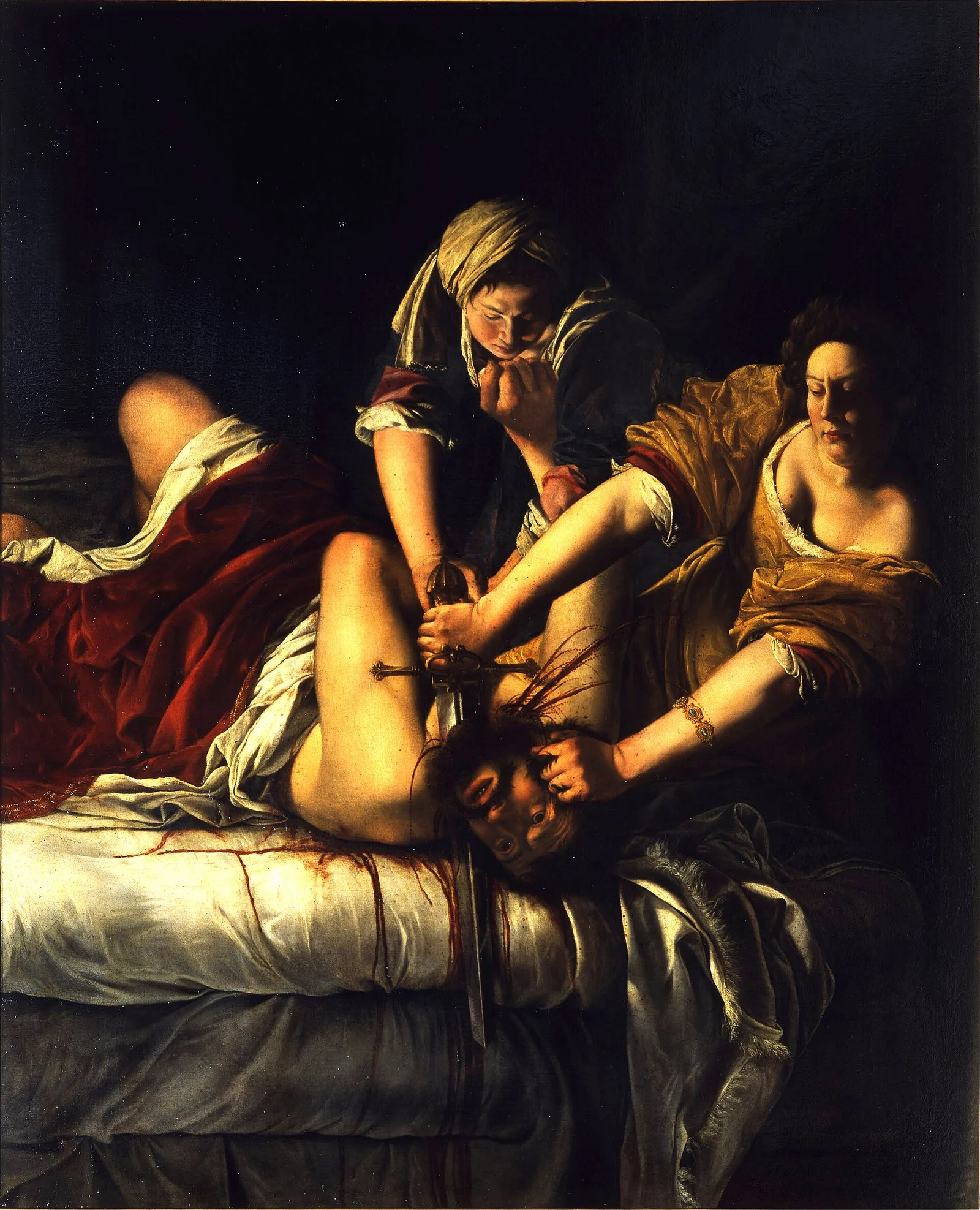
Judith Slaying Holofernes
At a glance
In the Uffizi version, Artemisia Gentileschi makes the effort of Judith and her maidservant central to the story of Holofernes.
Religious narrative
Judith and the siege of Bethulia
A city under siege
In the Book of Judith, Holofernes threatens Bethulia and controls its water supply. Judith challenges the local leaders’ plan to surrender.
Inside the camp
She enters the camp with her maid, gains the commander’s confidence and remains with him after a banquet. She takes the opportunity to kill him.
The siege breaks
Judith and her maid return with the commander’s head. His soldiers lose their confidence and flee.
Which moment does the artwork show?
Artemisia depicts Judith and the maid together at the decisive moment. The scene invests both figures with agency and effort.
The story behind the artwork
A city under siege
In the Book of Judith, the widow enters the camp of the Assyrian commander Holofernes and kills him, breaking the threat to her community.
A painting of coordinated action
Artemisia gives the maid an active role in restraining Holofernes. The two women bear down from above, and their overlapping arms make it clear how much force the action takes.
A closer look
The overlap makes Judith’s movement and her maid’s assistance inseparable.
The pale cloth makes the bodies and their movements easy to distinguish.
Her attention stays on the struggle beneath her.
Exposed forearms show the physical effort of the action.
A low fold registers resistance beneath the painted fabric.
Sources
Related works
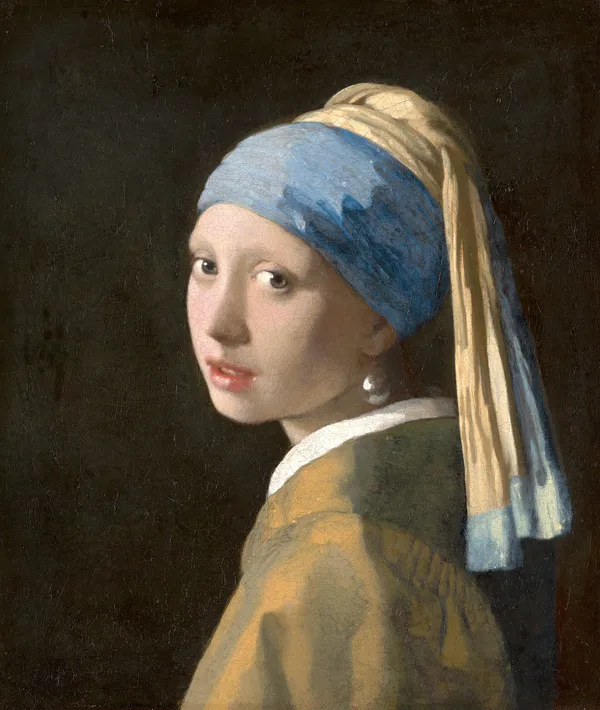
Girl with a Pearl Earring
Johannes Vermeer
Vermeer’s young figure looks back over her shoulder, picked out against a dark ground by blue cloth, a white collar and a gleaming earring.
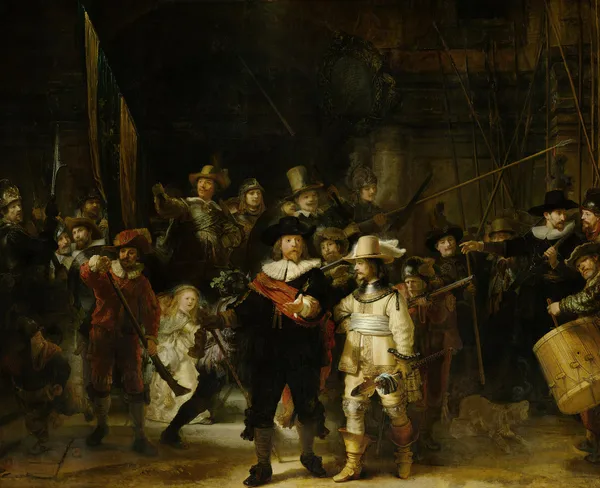
The Night Watch
Rembrandt van Rijn
Rembrandt catches an Amsterdam civic guard company in motion, with its captain and lieutenant stepping forward from a crowded interior.
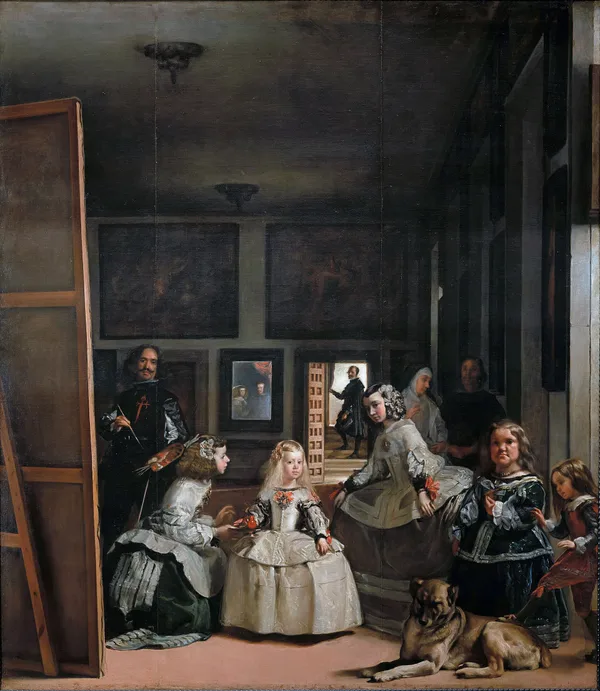
Las Meninas
Diego Velázquez
Velázquez places Infanta Margarita at the heart of a court scene that makes the viewer wonder who is being painted and who is looking.
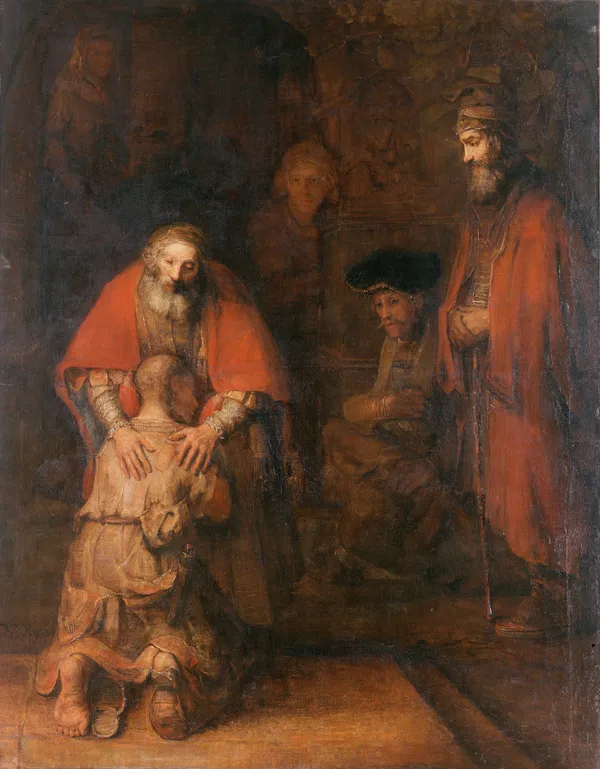
The Return of the Prodigal Son
Rembrandt van Rijn
Rembrandt builds the reunion of father and son around a low, quiet embrace, leaving much of the scene in warm shadow.