The Descent from the Cross
At a glance
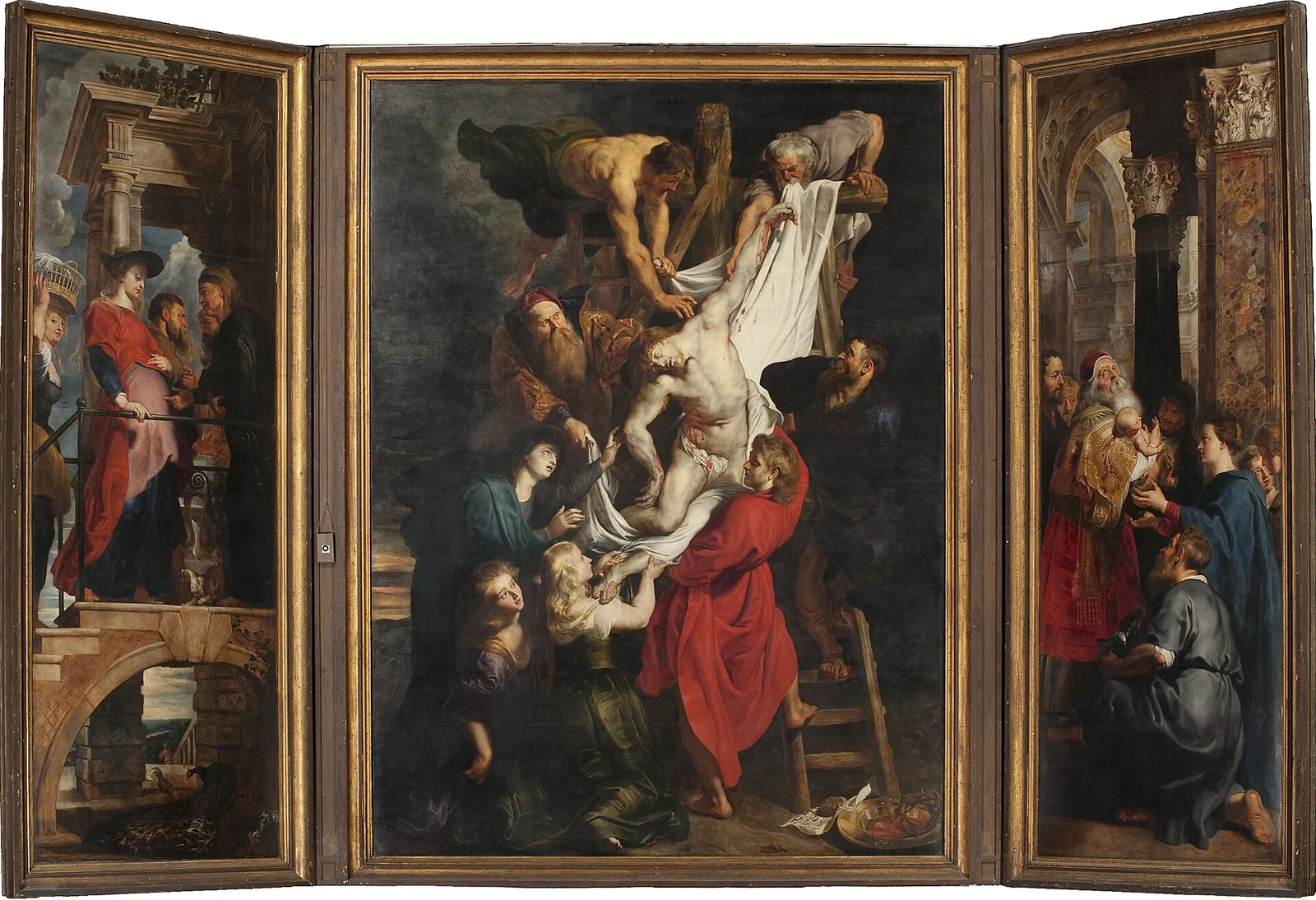
Rubens builds the central scene around the white shroud on which Christ’s body is lowered, with related episodes in the two wings.
Religious narrative
From the Crucifixion to the burial
Permission to remove the body
After Jesus dies, Joseph of Arimathea asks Pilate for permission to take his body. The Gospel accounts assign different roles to the people who accompany him.
The linen cloth
The body is wrapped in linen for burial and placed in a tomb. The descent, wrapping and carrying have become distinct subjects in Christian art.
The tomb
The place of burial sets the scene for the later reports of the empty tomb and Resurrection.
Which moment does the artwork show?
Rubens focuses on the effort of lowering the body. The large shroud gives his figures a shared object to support.
The story behind the artwork
The open altarpiece
The Antwerp arquebusiers commissioned the work for the Cathedral of Our Lady. On the wings, the Visitation and the Presentation in the Temple echo the theme of bearing Christ.
Weight along a diagonal
Across the centre, hands take hold of the cloth and the body from different levels. Their shared effort makes the descent feel slow and controlled.
A closer look
The broad pale diagonal carries the weight of Christ’s body through the centre.
The saturated fabric makes one supporting figure stand out amid the shadows.
The Visitation shows Mary greeting Elizabeth in a brighter outdoor setting.
The infant Christ is held in the Temple, echoing the act of carrying in the centre.
Several grips share the burden as the body is brought down.
Sources
Image credit
Shown with both wings open. The listed dimensions refer to the central panel.
Wikimedia Commons Original file (8.8 MB) Peter Paul RubensPublic domainRelated works
Girl with a Pearl Earring
Johannes Vermeer
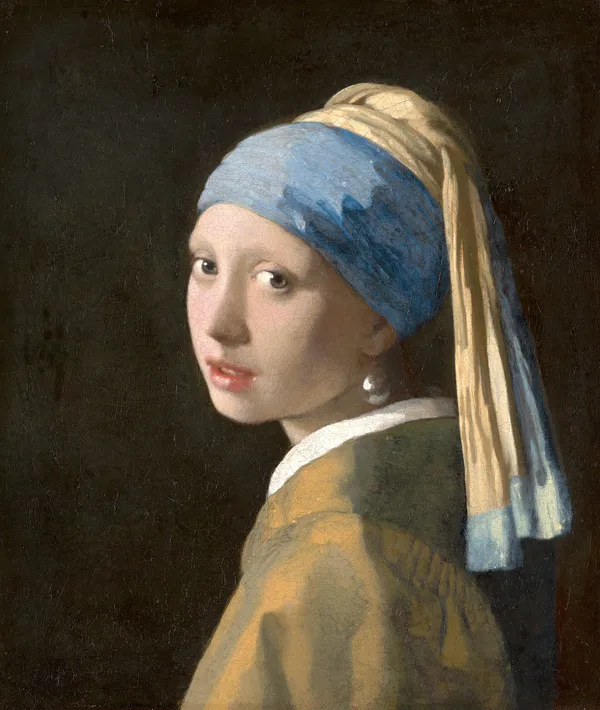
Vermeer’s young figure looks back over her shoulder, picked out against a dark ground by blue cloth, a white collar and a gleaming earring.
The Night Watch
Rembrandt van Rijn
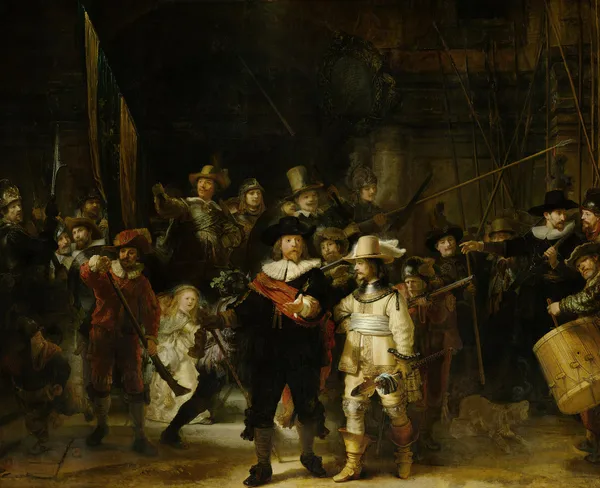
Rembrandt catches an Amsterdam civic guard company in motion, with its captain and lieutenant stepping forward from a crowded interior.
Las Meninas
Diego Velázquez
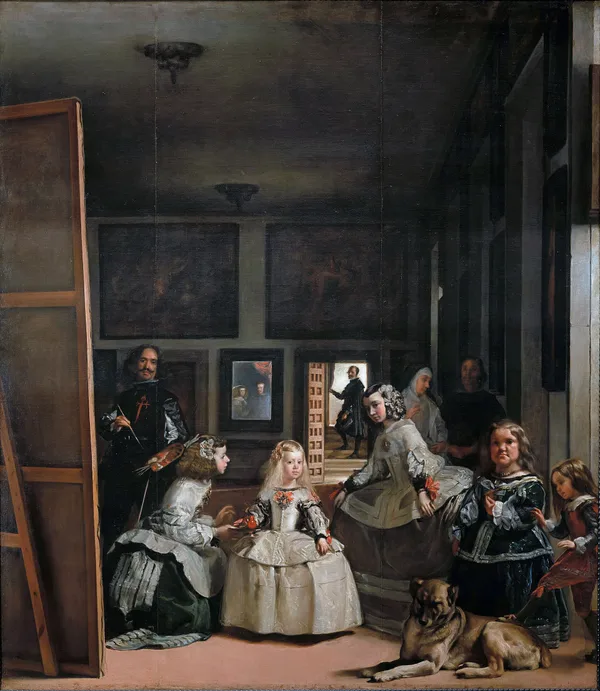
Velázquez places Infanta Margarita at the heart of a court scene that makes the viewer wonder who is being painted and who is looking.
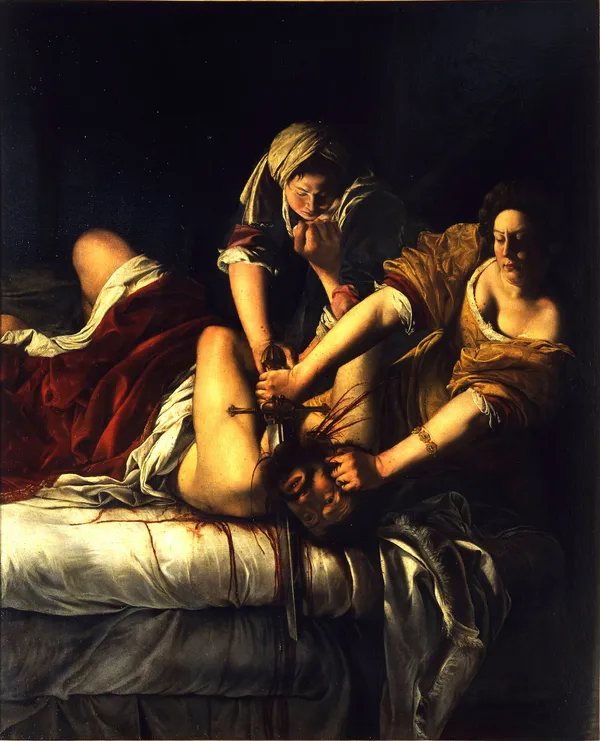
Judith Slaying Holofernes
Artemisia Gentileschi
In the Uffizi version, Artemisia Gentileschi makes the effort of Judith and her maidservant central to the story of Holofernes.