The Birth of Venus
At a glance
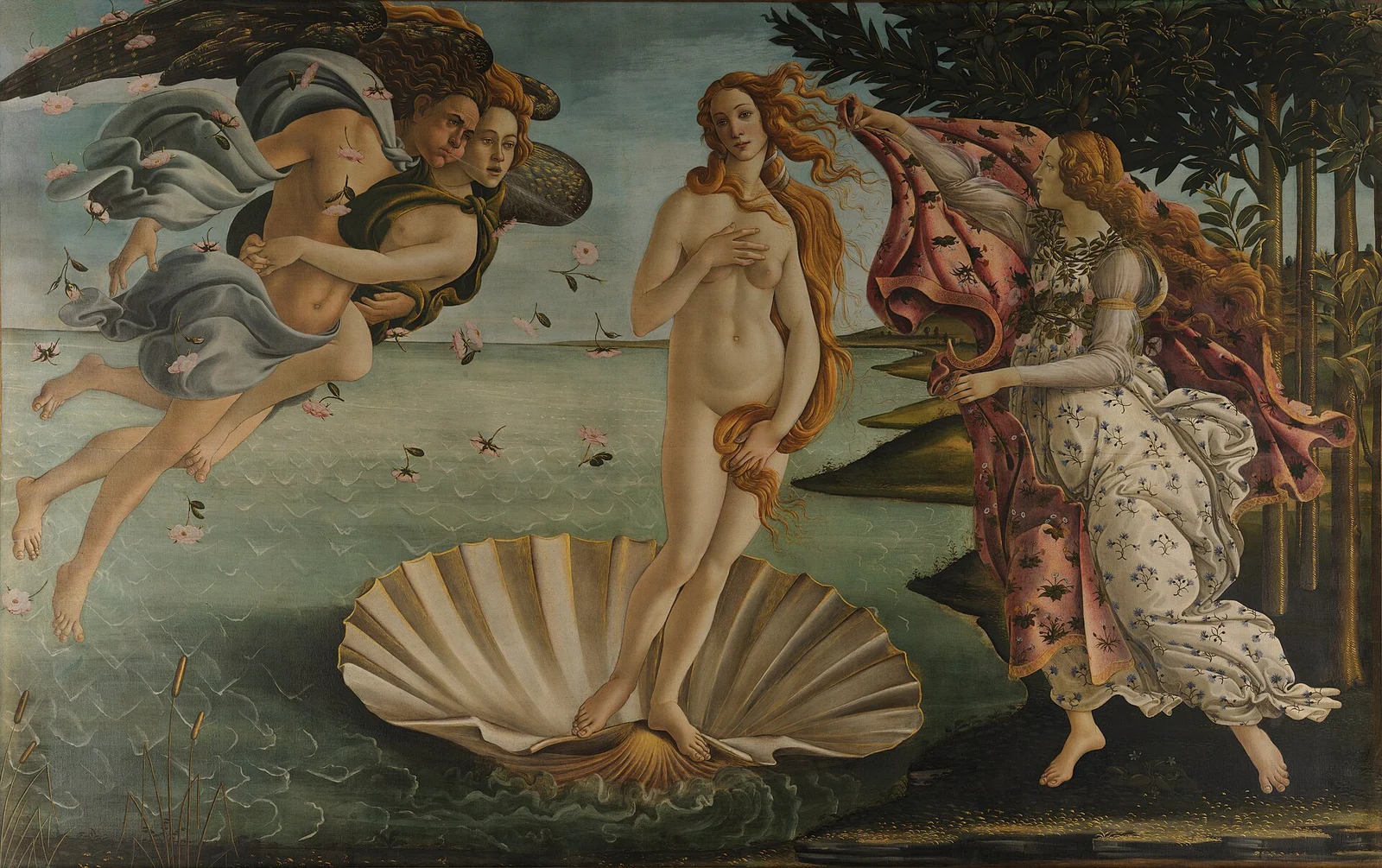
Botticelli shows Venus arriving at a shore on a shell, swept in by the winds and greeted by a figure holding a flowered cloak.
Mythology
From sea foam to land
A birth in Hesiod
In Hesiod’s Theogony, Aphrodite is born from foam on the sea after the overthrow of Uranus. In Roman tradition she is known as Venus.
A journey to Cyprus
Hesiod connects her emergence with Cythera and Cyprus. A Homeric Hymn describes the winds carrying her to Cyprus, where the Horae receive and clothe her.
Arrival among the gods
The goddess joins the divine assembly after she has been welcomed ashore. Ancient accounts differ in the details of the journey.
Which moment does the artwork show?
Botticelli shows the arrival at the shore. The shell, the pair of winds and the open cloak turn the crossing into a visible passage.
The story behind the artwork
From sea to shore
In classical accounts Venus is born from sea foam. Botticelli paints her arrival on land, a moment that lets wind, flowers, hair and fabric describe her passage across the water.
A figure made of line
The tilted shoulders, falling hair and long contours give Venus a delicate sense of balance. Her gesture belongs to a tradition of antique statues in which the goddess covers herself.
A closer look
The scalloped ridges lift Venus above the water like a moving platform.
Cheeks and flying drapery give visible form to the gust that propels the shell.
The cloak is stretched open, and its border moves in the same wind as Venus’s hair.
A long lock both covers the body and traces its curve.
Short light marks suggest ripples without breaking the broad horizontal calm.
Sources
Related works
Primavera
Sandro Botticelli
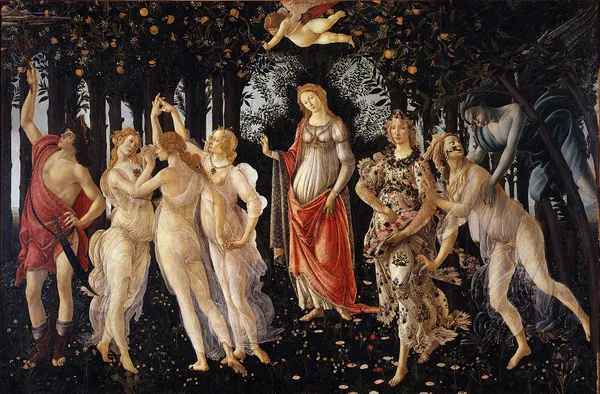
In Botticelli’s Primavera, mythological figures gather in a flowering grove where the movement of spring travels from right to left.
The Last Supper
Leonardo da Vinci
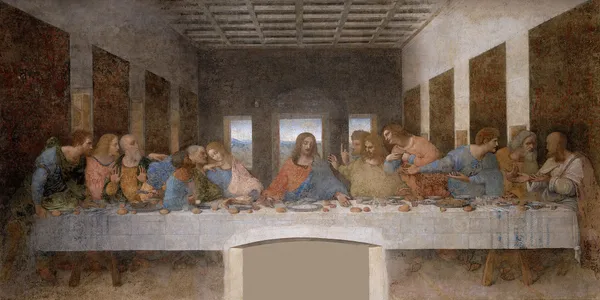
Leonardo places Christ at the centre of a carefully ordered refectory wall while the apostles react to the news that one of them will betray him.
The Arnolfini Portrait
Jan van Eyck
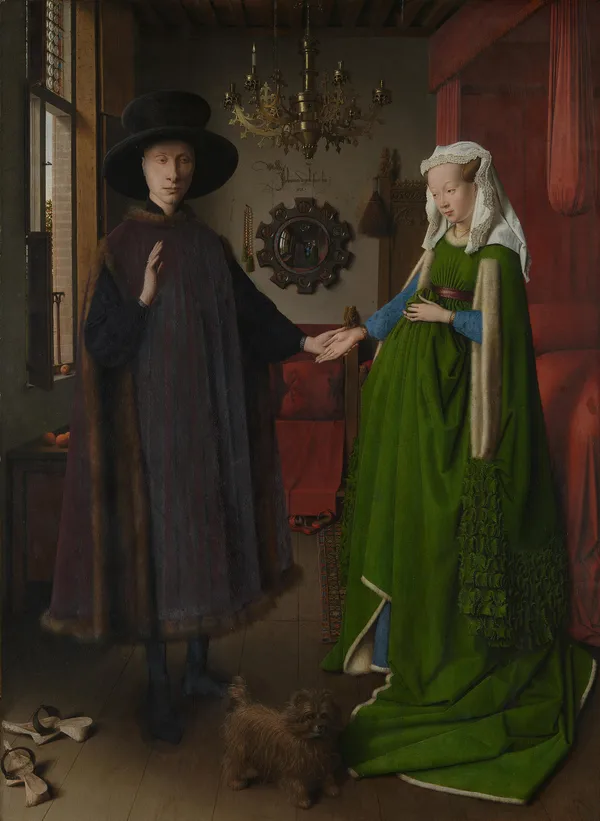
Jan van Eyck’s double portrait stages a meeting in a richly observed room, with a convex mirror that reflects the space behind the viewer.
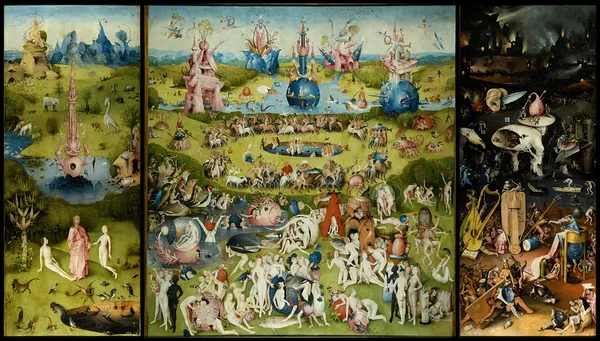
The Garden of Earthly Delights
Hieronymus Bosch
Bosch’s open triptych moves from Eden through a crowded garden of oversized fruit and fantastical bodies to a nightmarish world of punishment.