The Last Judgment
At a glance
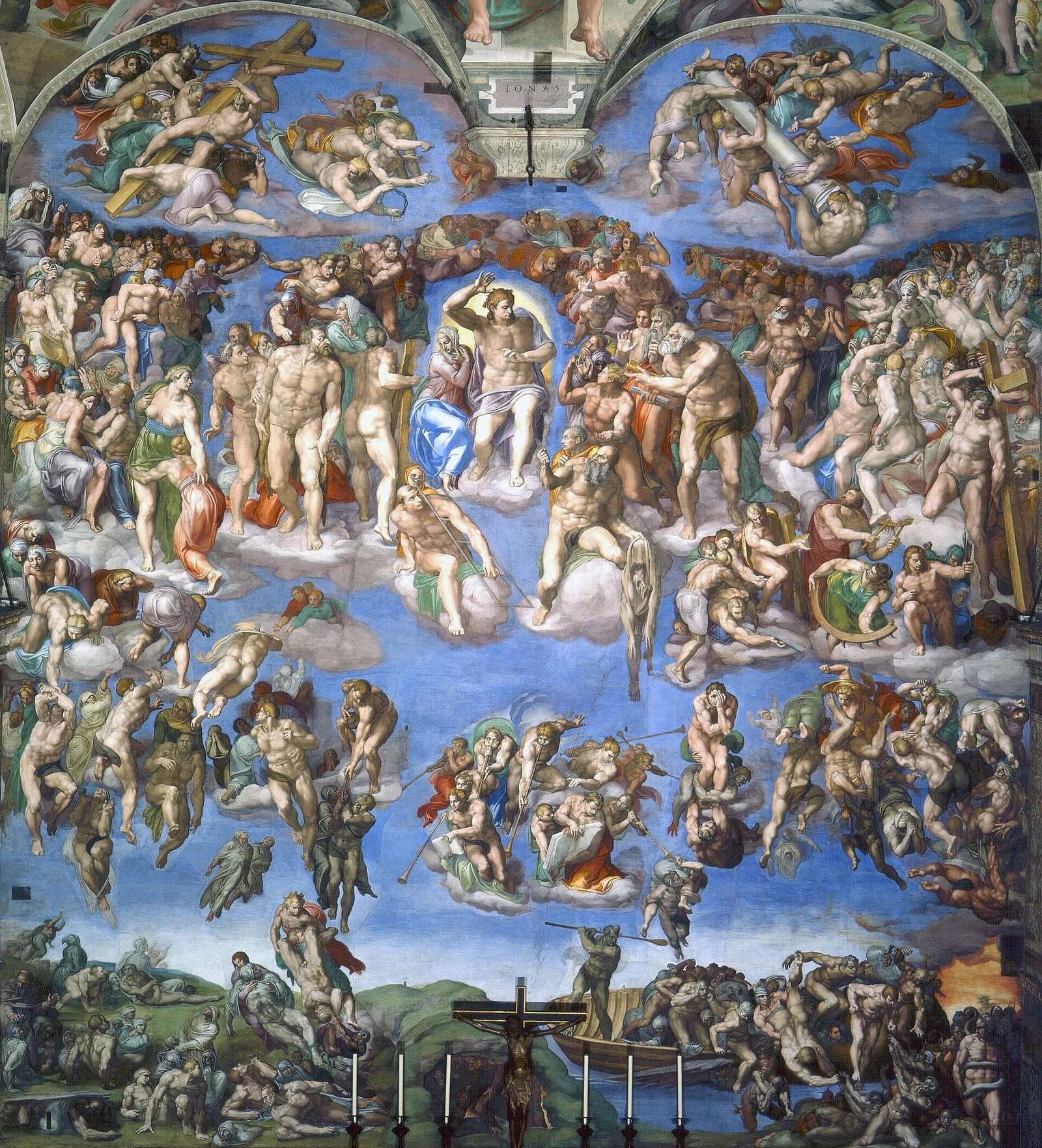
Michelangelo fills the Sistine Chapel’s altar wall with bodies rising, falling and turning around Christ at the Last Judgment.
Religious narrative
Resurrection and the Last Judgment
The gathering
Christian accounts describe the Son of Man returning in glory and bringing the nations together. Images of the judgment often incorporate resurrection and the sounding of trumpets.
A test of conduct
In Matthew, the king separates people based on how they cared for those who were hungry, thirsty, sick, isolated or imprisoned.
Two outcomes
The division ends in two different destinations. Michelangelo adds figures and places from multiple traditions to convey these outcomes.
Which moment does the artwork show?
The fresco shows several moments at once, from the raising of the dead to the movement of the saved and condemned.
The story behind the artwork
A wall transformed
The fresco was commissioned decades after Michelangelo had painted the chapel ceiling. Across the altar wall, figures emerge from the earth and move upward or fall under judgment.
Scripture and classical poetry
Trumpeting angels call the dead. Near the bottom, Michelangelo introduces the boatman Charon, a figure from classical mythology also encountered in Dante’s Inferno.
A closer look
The gesture at the centre sets much of the surrounding movement in motion.
Bodies in the lower left struggle up from the ground.
On the central axis, angels sound the summons and display the books.
The vessel forces a dense mass of bodies into the lower right.
Groups at the top carry objects associated with Christ’s Passion.
Sources
Related works
The Creation of Adam
Michelangelo
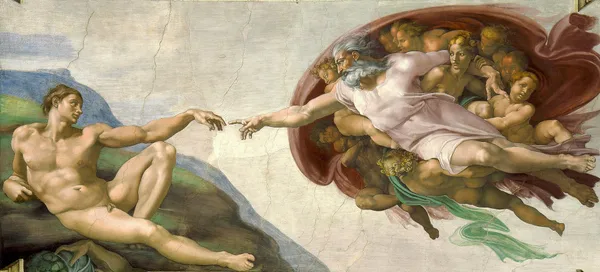
Michelangelo pictures the creation of Adam as a meeting across open sky, with the hands of God and the first human almost touching.
Mona Lisa
Leonardo da Vinci
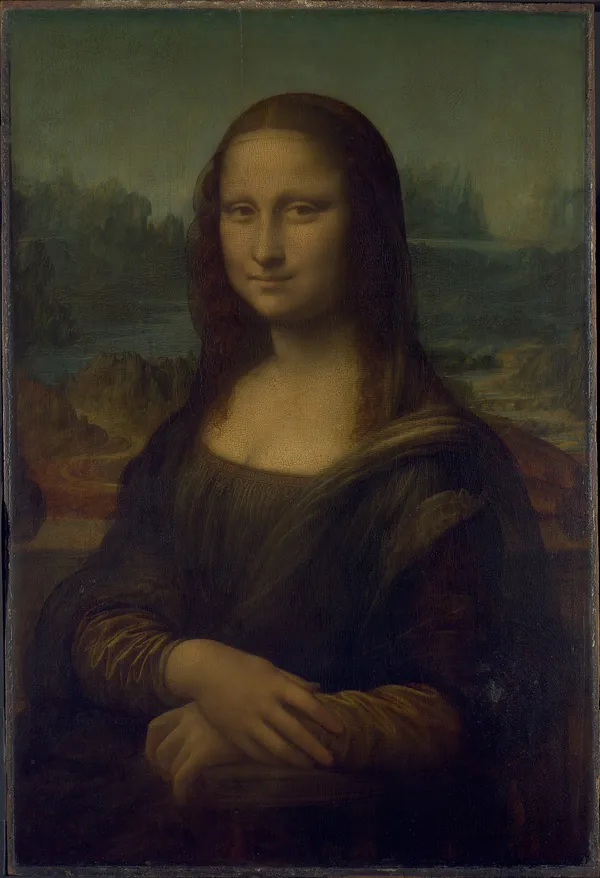
Leonardo da Vinci’s portrait of Lisa Gherardini combines a quietly animated expression with a landscape that seems to extend far beyond the sitter.
The School of Athens
Raphael
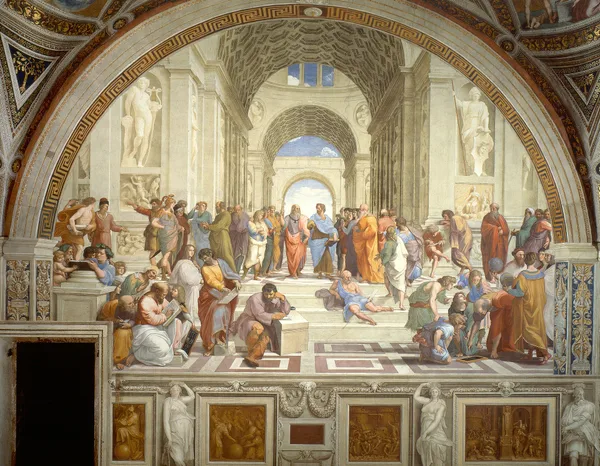
Raphael assembles philosophers from different centuries in a single imaginary hall, focusing their debate on Plato and Aristotle.
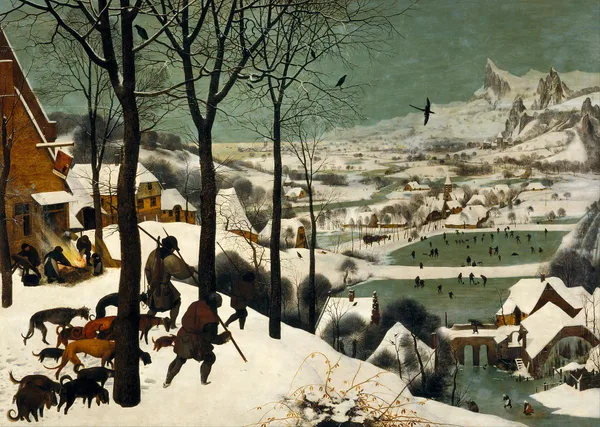
Hunters in the Snow
Pieter Bruegel the Elder
Bruegel’s hunters return to a snowbound village, where skaters and distant peaks open out below the dark silhouettes of dogs and trees.