The Dream
At a glance
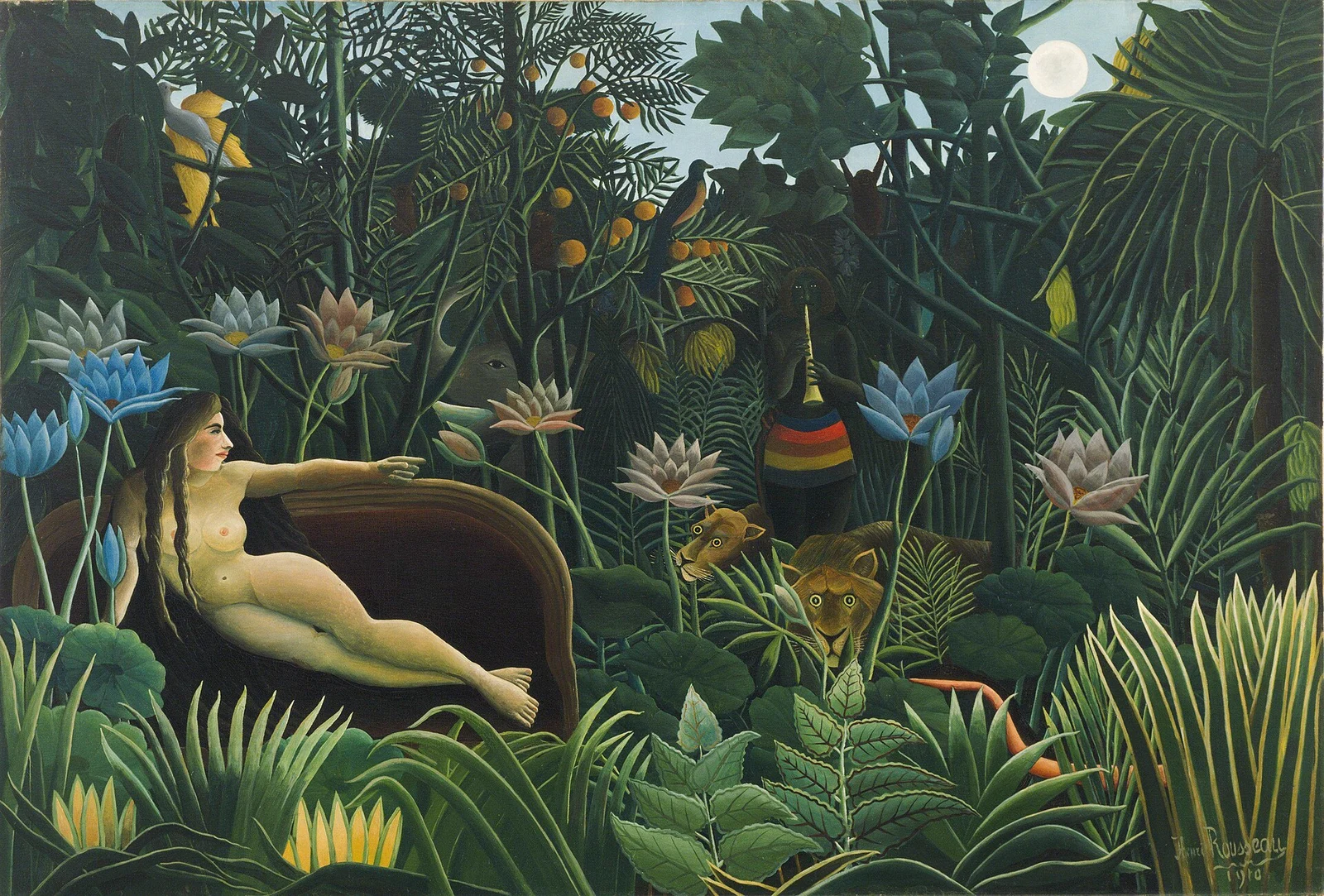
Henri Rousseau places a reclining woman on a sofa in a jungle crowded with leaves, animals and a musician, giving a dream the clarity of an ordinary room.
Imagined scene
Yadwigha’s journey from sofa to jungle
Falling asleep
Rousseau described a woman asleep on a sofa who dreams she has entered the forest. He identifies her as Yadwigha in the verse that accompanies the work.
Music in the leaves
A musician appears in the dense growth. Animals look outward and the moon hangs overhead, giving the dream the clues to a story without a full plot.
A dream held open
The familiarity of the sofa persists within the forest. The painter leaves the sleeper, the place and the music together without showing an awakening.
Which moment does the artwork show?
The sofa remains in sight amid thick plants. Its conspicuous position preserves the logic of the dream in Rousseau’s own account.
The story behind the artwork
The sofa that travels
Rousseau explained that the reclining woman dreamed herself into the jungle. Her sofa remains intact amid the vegetation, preserving the contradiction that makes the scene possible.
A jungle assembled in Paris
Rousseau’s plants and animals draw on things he could encounter in Paris, including botanical gardens and illustrated material. He multiplied shapes into a dense environment that rewards scanning.
A closer look
The upholstery is unmistakably domestic despite the foliage that surrounds it.
A face becomes visible only after the greenery stops looking continuous.
A pale disk lights the upper space without dispersing the crowded leaves.
The gesture carries the woman’s presence beyond the edge of the sofa.
Similar blades recur at several sizes, building depth through overlap.
Sources
Related works
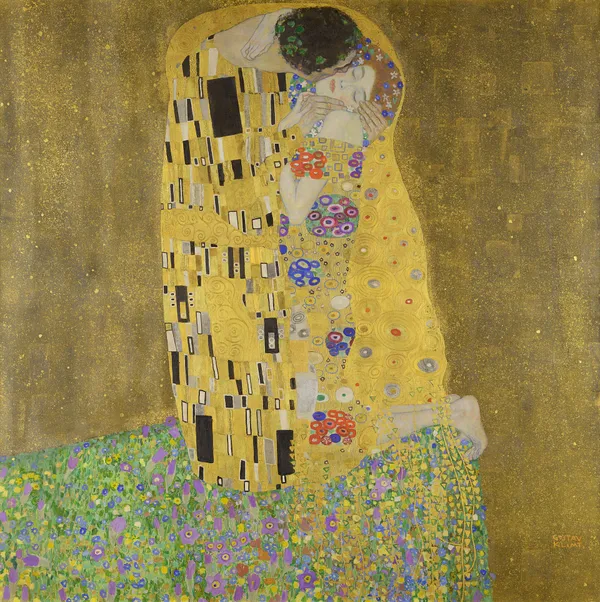
The Kiss (Lovers)
Gustav Klimt
Gustav Klimt surrounds an embracing couple in gold, allowing patterned robes and a flowering ledge to carry much of the intimacy of the scene.
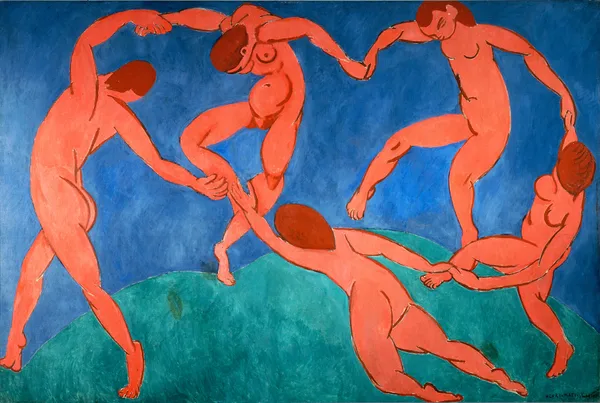
Dance
Henri Matisse
Matisse brings five red dancers into a broad circle on green ground beneath a blue sky, putting the strength of the movement into the smallest gaps.
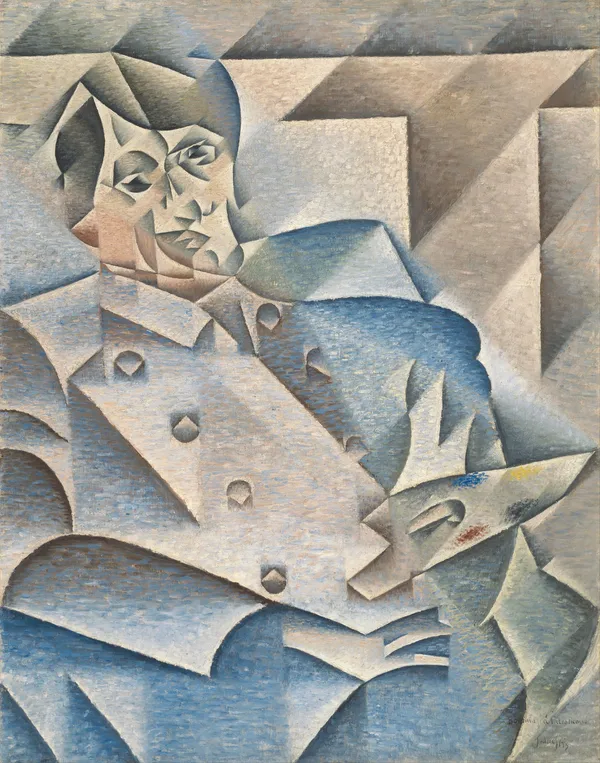
Portrait of Pablo Picasso
Juan Gris
Juan Gris builds his portrait of Picasso from intersecting planes, keeping the sitter identifiable through a few telling features and the palette in his hand.
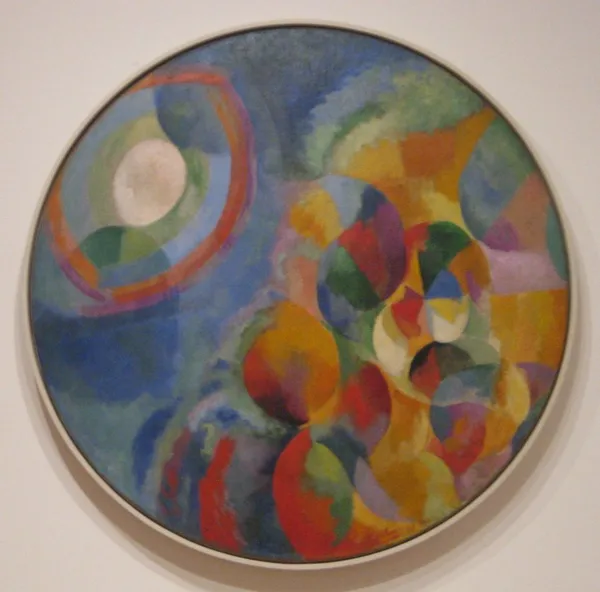
Simultaneous Contrasts: Sun and Moon
Robert Delaunay
Delaunay fills a round canvas with intersecting arcs and contrasting colours that seem to expand, turn and change depending on their neighbours.