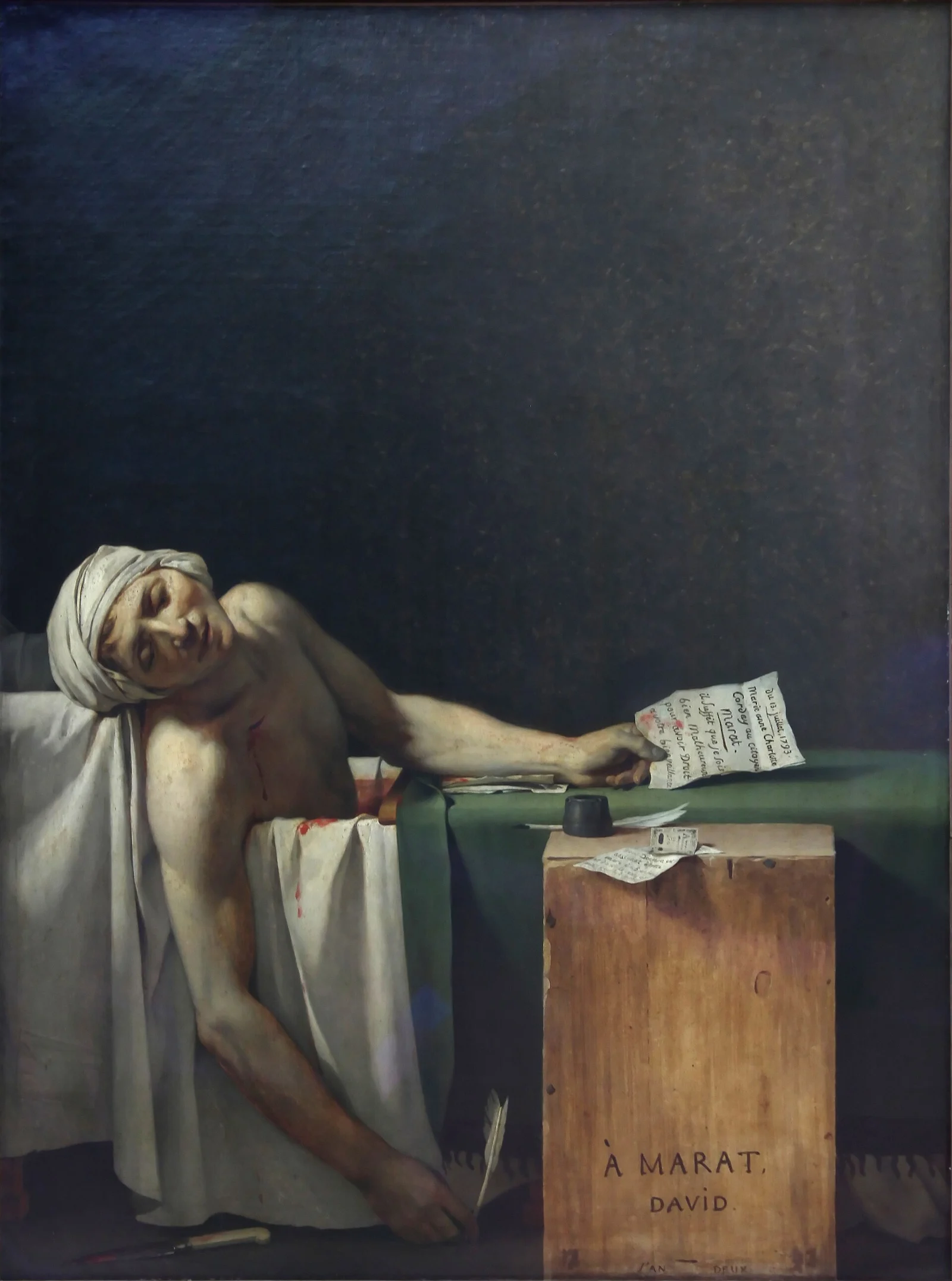
The Death of Marat
At a glance
David presents the murdered revolutionary Jean-Paul Marat in his bath, using a letter, a pen and a bare wooden box to shape a partisan memorial.
Historical account
Why Charlotte Corday visited Marat
A revolution divided
By 1793, the radical Mountain and the Girondins had become bitter opponents. Corday, who lived in Caen, blamed Marat’s political writings for helping to drive the Revolution toward violence.
13 July 1793
Corday went to Paris and gained access to Marat by offering information about Girondins in Normandy. While he was taking a medicinal bath, she stabbed him.
Trial and memorial
Corday was arrested at the scene, tried and executed. David gave the dead man a public presence in paint as revolutionary supporters made him into a martyr.
Which moment does the artwork show?
The attack has already happened. The letter and pen keep the encounter and Marat’s writing present in the scene.
The story behind the artwork
An assassination in 1793
Charlotte Corday killed Marat at his home. Marat worked from his bath because of a painful skin condition, which gave David the unusual setting for a political portrait.
Making an image of sacrifice
The painter suppresses much of the room and gives the dead body a graceful, lowered pose. The letter and pen associate Marat with public work, helping David guide a revolutionary audience’s response.
A closer look
A sheet in Marat’s hand preserves the connection to Corday.
The plain surface carries David’s dedication where a stone monument might bear it.
The bright wrapping keeps the lowered head legible against the dark field.
The writing instrument remains between slack fingers.
The large dark field isolates the bath and the figure.
Sources
Related works
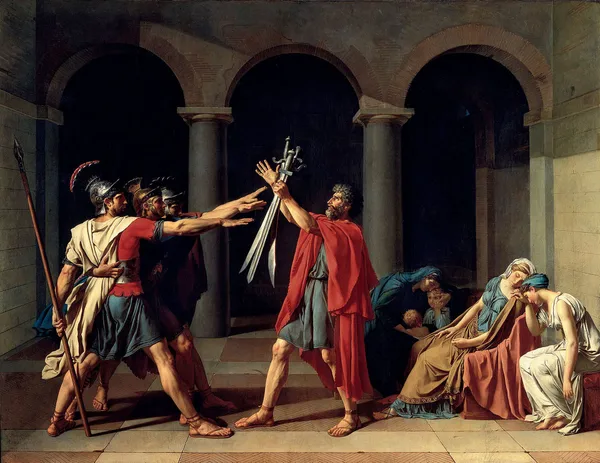
Oath of the Horatii
Jacques-Louis David
David places three brothers, a father holding swords and a grieving family in three sharply separated zones of a Roman interior.
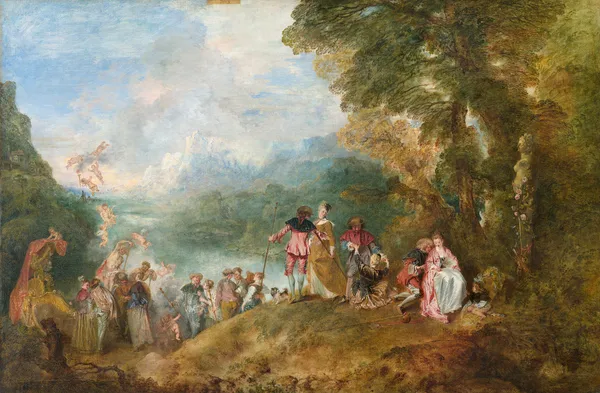
Pilgrimage to Cythera
Jean-Antoine Watteau
Watteau follows couples from a wooded hillside toward a distant boat in a scene poised between departure and an imagined island of love.
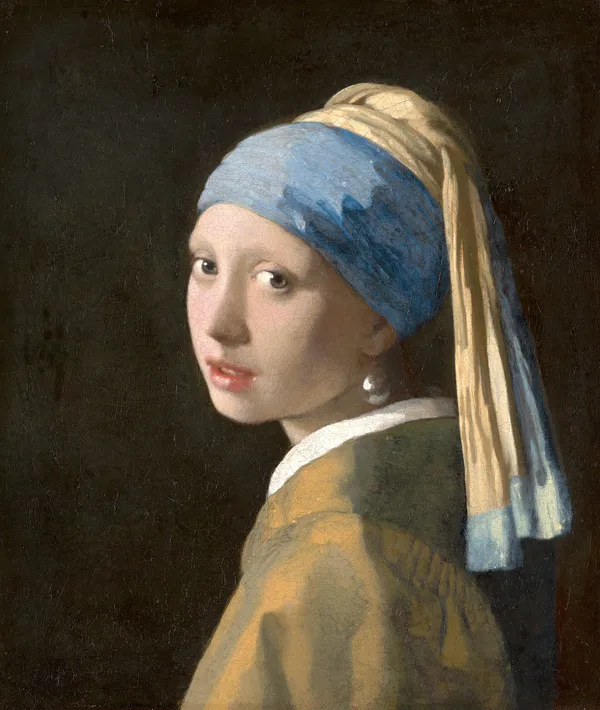
Girl with a Pearl Earring
Johannes Vermeer
Vermeer’s young figure looks back over her shoulder, picked out against a dark ground by blue cloth, a white collar and a gleaming earring.
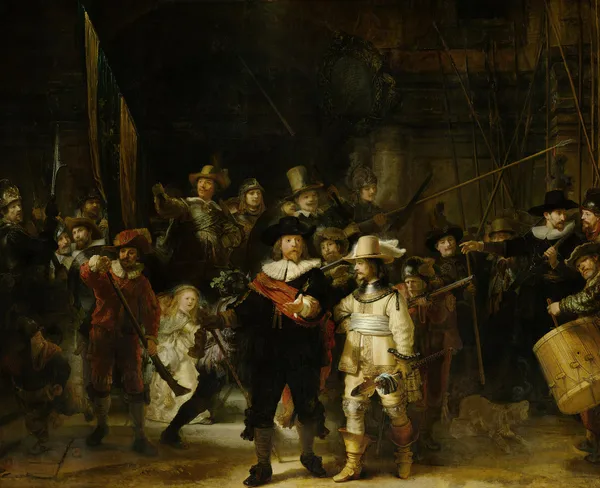
The Night Watch
Rembrandt van Rijn
Rembrandt catches an Amsterdam civic guard company in motion, with its captain and lieutenant stepping forward from a crowded interior.