The Cyclops
At a glance
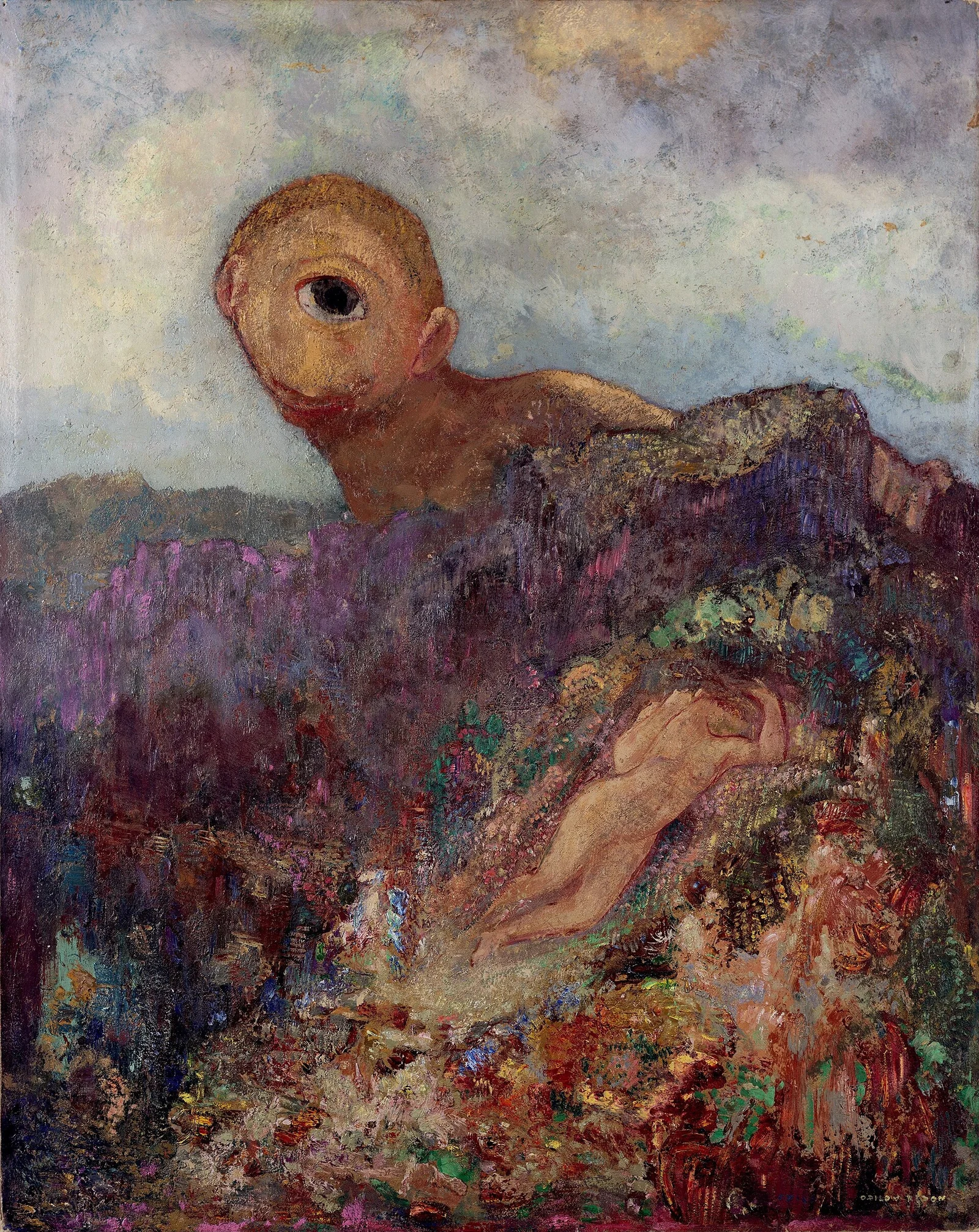
Odilon Redon imagines the one-eyed Polyphemus peering over a rock toward the sleeping Galatea in a landscape that barely separates bodies from colour.
Mythology
Galatea, Acis and Polyphemus
On the Sicilian shore
In Ovid’s Metamorphoses, the sea nymph Galatea loves Acis. The Cyclops Polyphemus desires Galatea, who rejects him.
A song and a discovery
Polyphemus sings his love, then discovers the couple together. He pursues them and kills Acis with a boulder.
Acis becomes a river
Galatea transforms Acis’s blood into flowing water, giving him another form and a place in the landscape.
Which moment does the artwork show?
Redon shows a giant looking at Galatea from behind rock. This private, dreamlike encounter does not illustrate the violent climax of Ovid’s account.
The story behind the artwork
A myth made inward
The Cyclops loves Galatea in classical tradition. Redon shows a private gaze rather than a public confrontation, allowing the enormous eye to seem curious or tender as well as strange.
Bodies emerging from paint
Galatea lies low among patches of colour. The rock conceals most of Polyphemus, and his face opens a sudden route out of the densely worked landscape.
A closer look
The lone eye becomes the scene’s point of contact.
Her body is hard to separate from the colours on the ground.
Only part of the giant is visible, making his size difficult to grasp.
The sloping surface divides the space occupied by each figure.
Soft edges keep the lower colours from resolving into clearly drawn plants.
Sources
Related works
The Kiss (Lovers)
Gustav Klimt
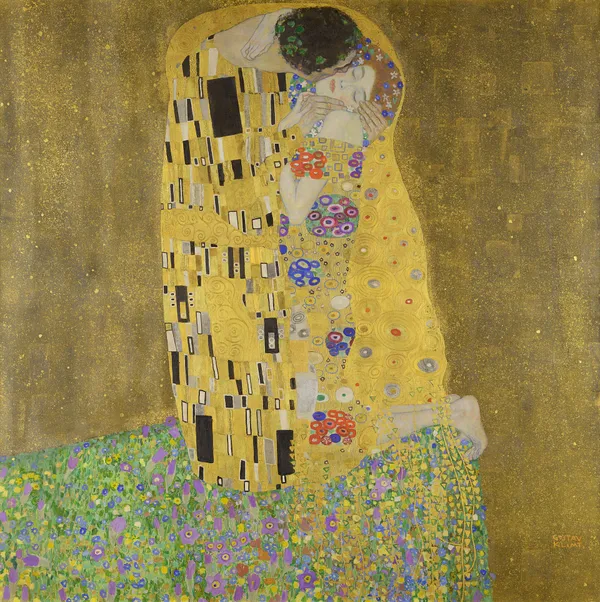
Gustav Klimt surrounds an embracing couple in gold, allowing patterned robes and a flowering ledge to carry much of the intimacy of the scene.
Dance
Henri Matisse
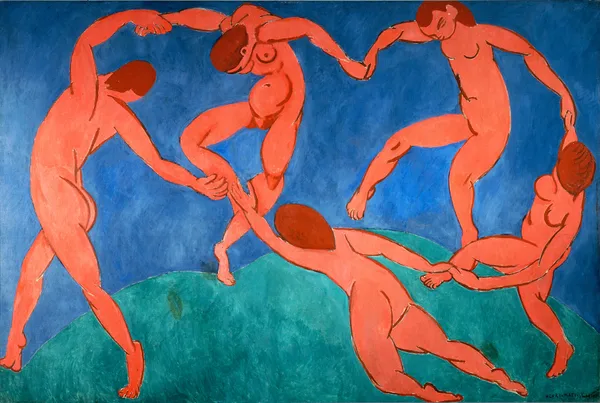
Matisse brings five red dancers into a broad circle on green ground beneath a blue sky, putting the strength of the movement into the smallest gaps.
Portrait of Pablo Picasso
Juan Gris
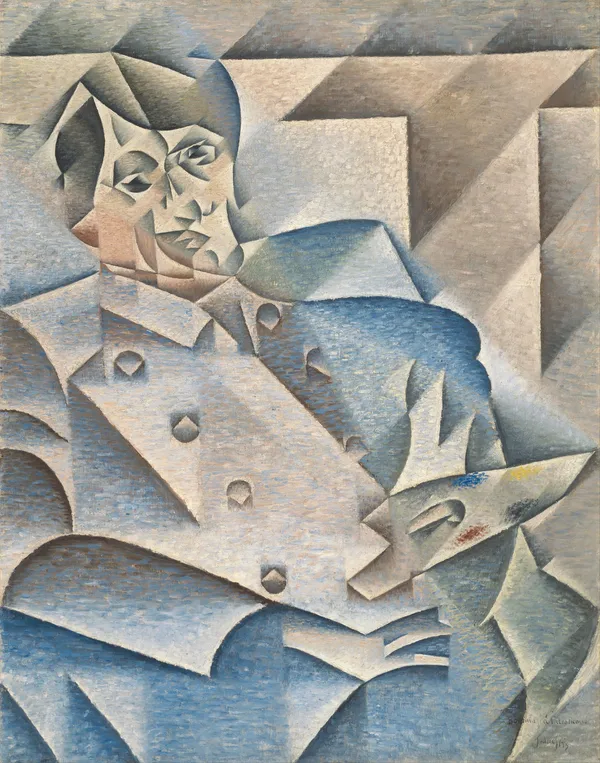
Juan Gris builds his portrait of Picasso from intersecting planes, keeping the sitter identifiable through a few telling features and the palette in his hand.
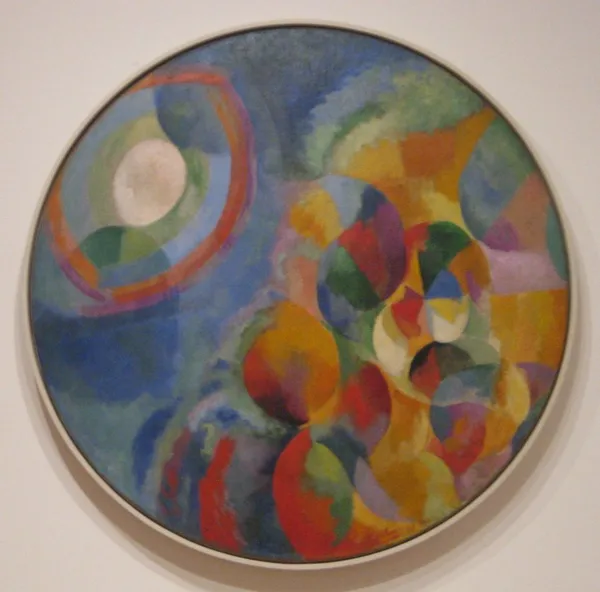
Simultaneous Contrasts: Sun and Moon
Robert Delaunay
Delaunay fills a round canvas with intersecting arcs and contrasting colours that seem to expand, turn and change depending on their neighbours.