Dream of a Sunday Afternoon in Alameda Park
At a glance
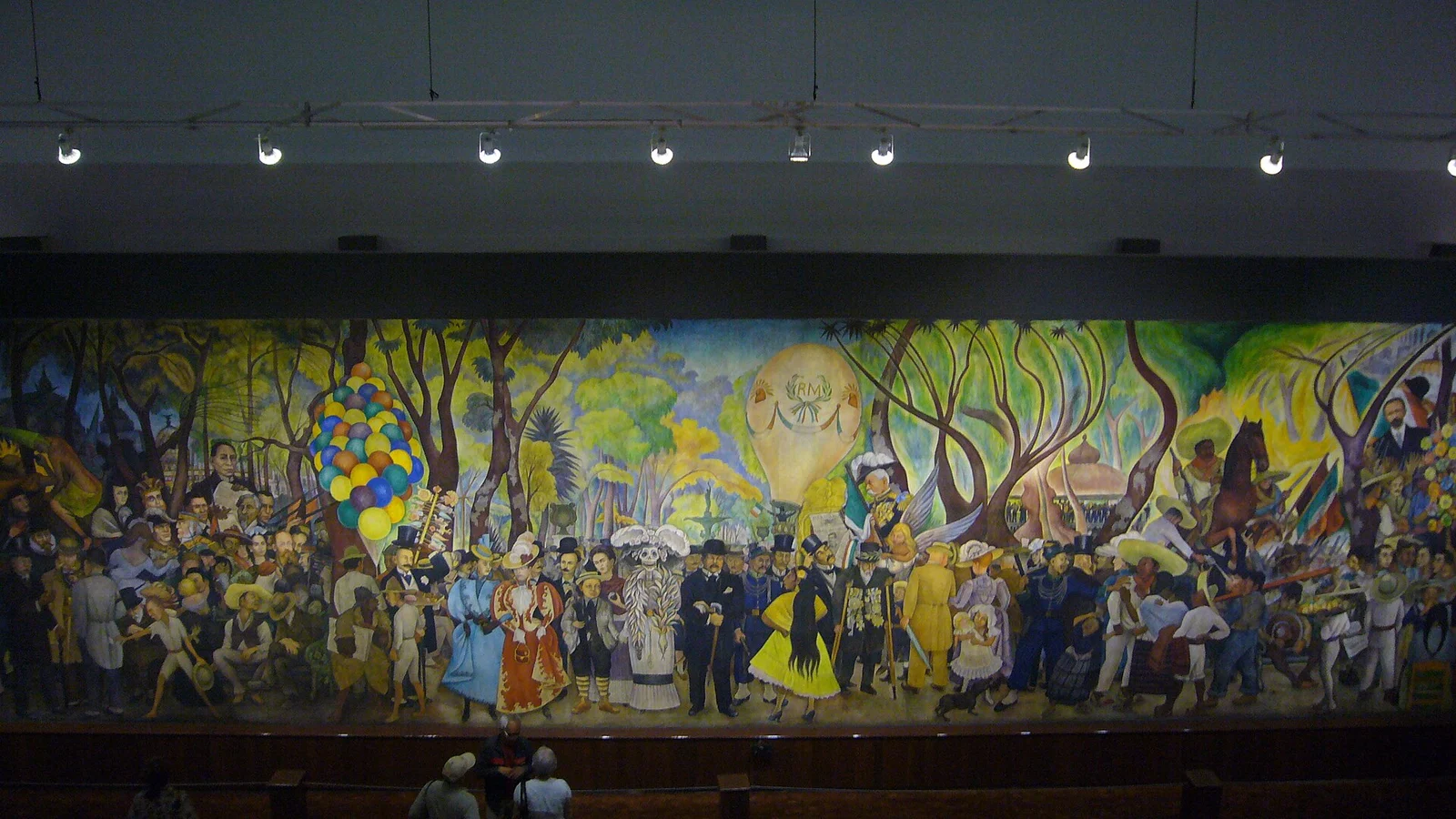
Diego Rivera assembles people from centuries of Mexican history in an imaginary afternoon gathering in Mexico City’s Alameda Central.
Imagined scene
An impossible afternoon in Alameda Central
A park across time
Alameda Central supplies the geography of an imaginary gathering. Rivera fills it with figures who could never have been present at the same moment.
At the centre
The painter appears as a boy beside La Catrina, accompanied by José Guadalupe Posada and Frida Kahlo. The group reflects on the sources and legacy of Rivera’s art.
A public history
Other passages bring together figures associated with conquest, political change and social conflict. The mural lets viewers make connections by moving between these groups.
Which moment does the artwork show?
Rivera depicts a meeting he invented. The paths and trees hold together otherwise widely separated historical experiences.
The story behind the artwork
A history walk through the park
Rivera made the mural for the Hotel del Prado. The park brings episodes and people from remote periods into the same public space, making the procession both historical and impossible.
Who stands beside La Catrina
At the centre, the elegantly dressed skeleton stands with printmaker José Guadalupe Posada and Rivera as a child. Frida Kahlo is behind them, close to the artist’s figure.
A closer look
The bony face rises above a striking costume and holds the centre of the gathering.
The branches identify the park and contain the crowded scene.
The proximity of people from different periods makes chronology less important than juxtaposition.
Posada and the young Rivera turn the central encounter into a dialogue about Mexican visual culture.
The grouping extends the history beyond the intimate scene at the centre.
Sources
Image credit
The mural in the Museo Mural Diego Rivera. It was originally made for the Hotel del Prado.
Wikimedia Commons Original file (1.9 MB) Kent WangCC BY-SA 2.0Related works
Campbell's Soup Cans
Andy Warhol
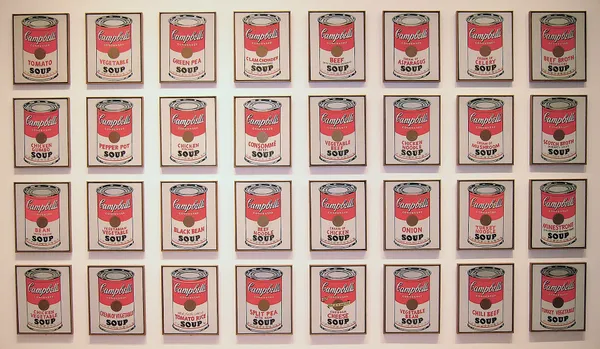
Andy Warhol painted 32 varieties of Campbell’s soup on separate canvases, turning the repetition of a grocery shelf into an organising principle for art.
Nighthawks
Edward Hopper
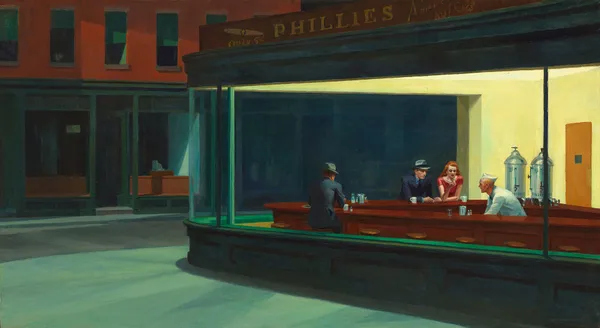
Hopper sets four people inside a brightly lit all-night diner, leaving the corner outside almost completely empty.
Bright Light at Russell's Corners
George Ault
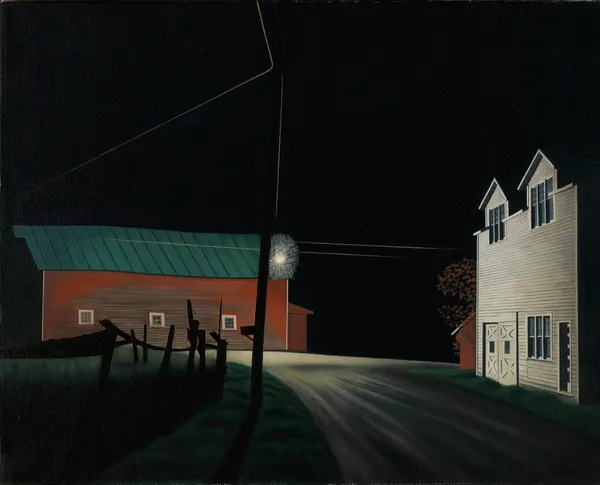
George Ault sets a hard pool of electric light against an empty crossroads near Woodstock, New York, in a night scene of nearly abstract planes.

The March of Humanity
David Alfaro Siqueiros
Siqueiros wraps the Polyforum’s interior in a mural cycle, using framed sections, rising bodies and relief to address humanity’s struggles and aspirations.