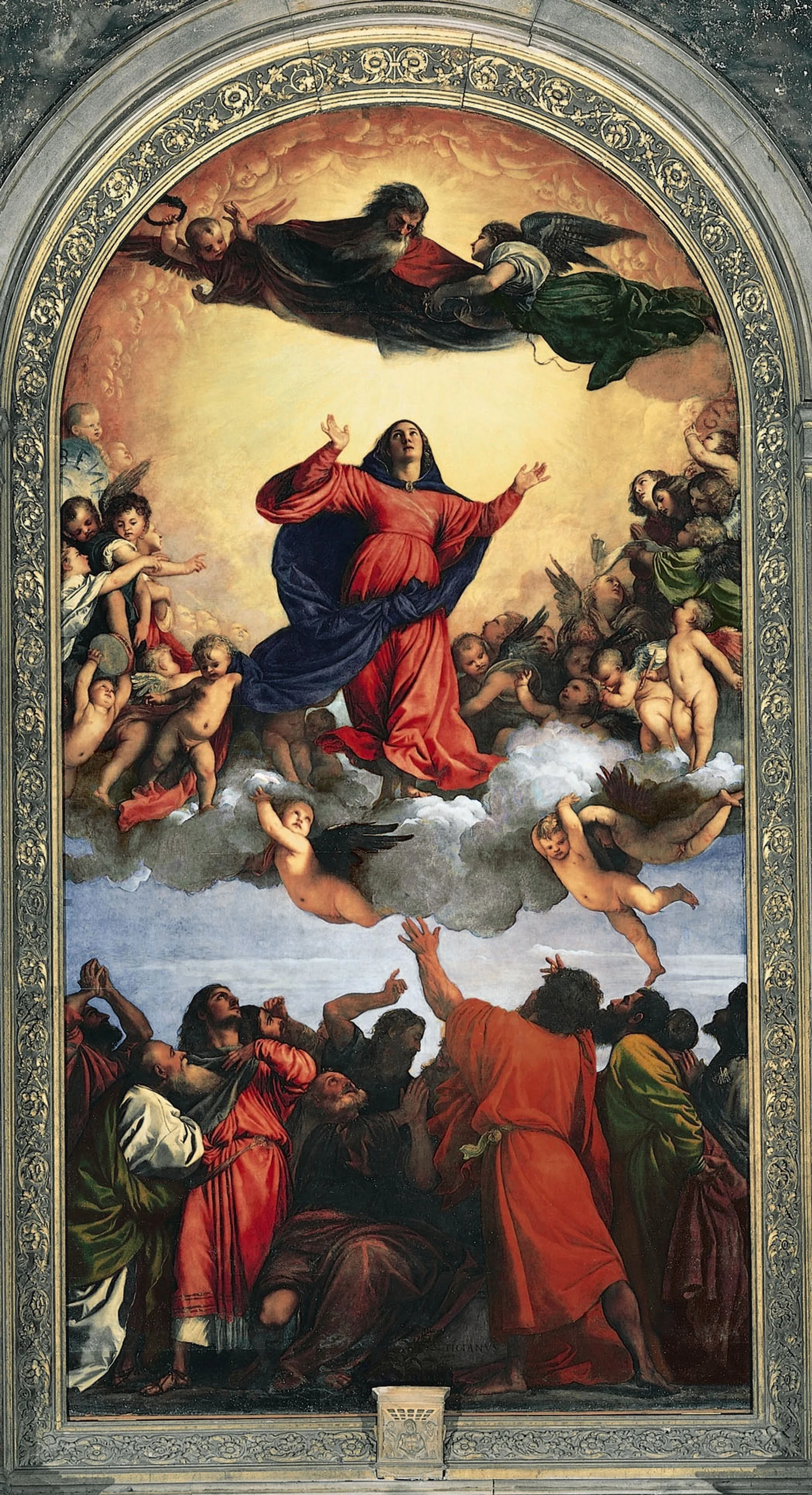
Assumption of the Virgin
At a glance
Titian’s towering altarpiece carries Mary from a crowded group of apostles into a golden heaven above the high altar of the Frari.
Religious narrative
Mary’s Assumption in Christian tradition
The end of Mary’s earthly life
The canonical Gospels give no account of the Assumption. Later Christian traditions describe Mary at the end of her earthly life, often surrounded by apostles.
Mary received into heaven
The tradition that she was taken body and soul into heaven has different accounts and images. In the Eastern Christian tradition, the Dormition is a related feast.
A formal Catholic definition
The Roman Catholic Church defined the Assumption as dogma in 1950, long after Titian painted the altarpiece.
Which moment does the artwork show?
Titian shows Mary rising on a cloud amid angels. The apostles on the ground and God above make three levels of a single ascent.
The story behind the artwork
A painting seen from afar
The work belongs to the Franciscan church of Santa Maria Gloriosa dei Frari. Its large forms and strong colour remain legible across the long nave.
The ascent
According to the Christian tradition of the Assumption, Mary is taken into heaven at the end of her earthly life. Titian sets the event across three zones joined by reaching hands and flashes of red.
A closer look
Strong red holds the rising figure within the mass of light.
Arms lift out of the crowded lower register toward the cloud.
A figure leans into the gold field at the highest point.
A curving cloud carries Mary and the surrounding angels.
A foreground apostle’s clothing rhymes with Mary’s dress and links the two levels.
Sources
Related works
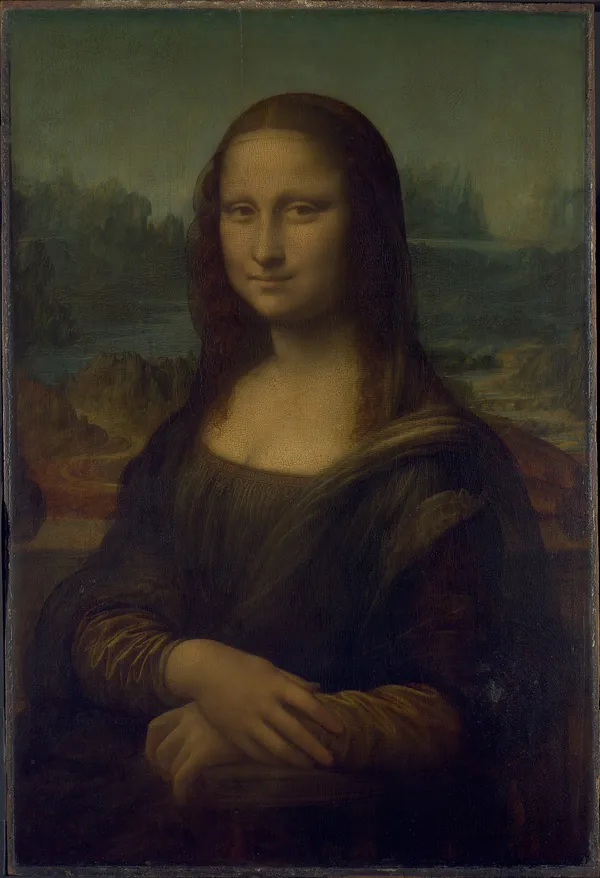
Mona Lisa
Leonardo da Vinci
Leonardo da Vinci’s portrait of Lisa Gherardini combines a quietly animated expression with a landscape that seems to extend far beyond the sitter.
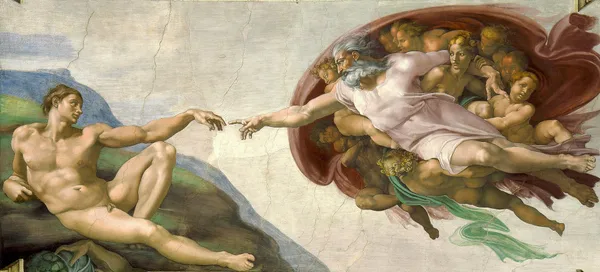
The Creation of Adam
Michelangelo
Michelangelo pictures the creation of Adam as a meeting across open sky, with the hands of God and the first human almost touching.
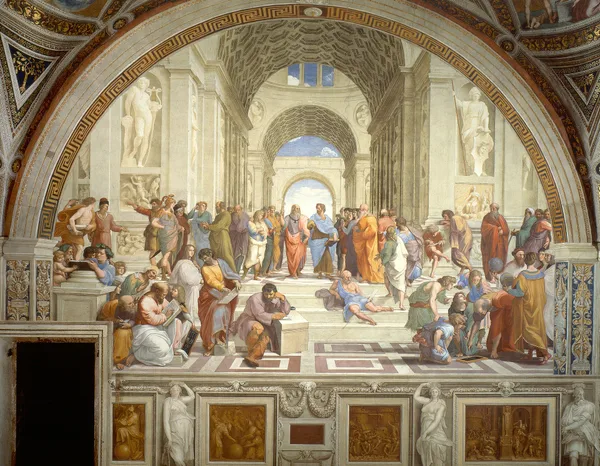
The School of Athens
Raphael
Raphael assembles philosophers from different centuries in a single imaginary hall, focusing their debate on Plato and Aristotle.
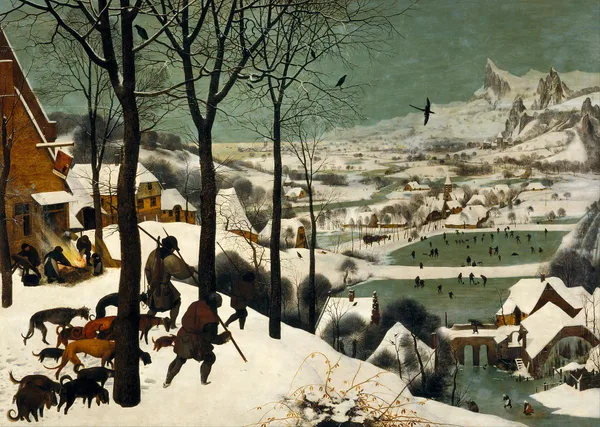
Hunters in the Snow
Pieter Bruegel the Elder
Bruegel’s hunters return to a snowbound village, where skaters and distant peaks open out below the dark silhouettes of dogs and trees.